6TH WORLD JOURNALISM EDUCATION CONGRESS: Call for Abstracts

6TH WORLD JOURNALISM EDUCATION CONGRESS: Call for Abstracts

“Change and Continuity: Journalism Education in the Digital Era” is the theme of the 6th World Journalism Education Congress (WJEC). It will be held in Beijing, China, between July 6 and 8, 2023, with a post conference in Shanghai, China, on July 10, 2023.

The conference is being organized by the Communication University of China (CUC) in Beijing and the Shanghai International Studies University (SISU) in Shanghai. It follows the successful fifth congress held in Paris, France, in July 2019. For details see http://www.wjec.paris.

With the support and participation of journalism education organizations worldwide,* the Congress provides a necessary discussion forum on journalism education worldwide. The WJEC also supports and encourages the continuing evolution of journalism and journalism education around the globe. 

AREAS OF RESEARCH 

The WJEC is currently soliciting academic paper abstracts under the wide umbrella of journalism education. Accepted abstracts will be presented as refereed research papers at the forthcoming conference in Beijing, China. 

Although abstracts will be accepted on a variety of journalism and mass communication topics, submitters are encouraged to focus on the broader conference theme: “Change and Continuity: Journalism Education in the Digital Era.”

ABSTRACT SUBMISSION GUIDELINES

Deadlines: WJEC invites interested presenters to electronically submit abstracts only (minimum 500 words; maximum 800 words) by October 15, 2022

When submitting an abstract, please follow these steps:

  1. Go to the conference abstract submission platform (https://bit.ly/WJEC2023).
  2. Click on “Registration” in the Menu bar or click on “Create Account” in the Login Menu. It will take you to “Create New Account,” which is self-explanatory and guided. Finish signing up by confirming your email address.
  3. Once the account is set up, sign in using your email address and password.
  4. To submit the abstract, click on “Create a New Paper Submission.”
  5. The next step will require you to provide the title of the paper and an abstract (9,000 charactersmaximum). If your abstract’s character count exceeds 9,000 characters, you can also attach it as a doc or PDF file. However, you cannot leave the abstract box empty. Write a brief abstract or keywords for your paper if you choose to upload it as an attachment. The abstract should give a clear sense of the scope of the research, research objectives and methods of inquiry. If researchers have completed their projects by the submission deadline, paper abstracts must also include research results and discussion/conclusions.
  6. Next, you can add additional authors if there are any. You can add as many authors as you need.
  7. Finally, click the submit button to upload the abstract.
  8. You can log into the site at any time to check the status of your submission or if you need to edit something. But you can only do this up to the submission deadline of October 15, 2022. You will not be able to make any changes to your submission after the deadline.
  9. Full papers are due May 1, 2023, to be eligible for inclusion in the online conference proceedings. 

Also note the following:

  • Ensure that the document you upload does NOT include ANY information that identifies the author/s or his/her affiliation/s. Abstracts submitted with author identifiable information will automatically be removed from the pool of submissions and will not be considered for review or included in the conference program.
  • Ensure that you add ALL your name, affiliation, email address and other required information in the online system before uploading your paper abstract. This enables the conference organizers to keep track of individual authors and their abstracts. Ensure the email address you include is the one you want the paper chair to use to communicate with you about your submission and where you will receive a confirmation once you have successfully submitted your abstract.

Review process: A panel of international judges will blind-review all submissions. Paper selections will be finalized by the end of December 2022, and presenters will be informed. 

CONTACT

For more information about the 2023 WJEC in China, please contact:

For more information about the call for papers, please contact:

*The World Journalism Education Council (WJEC) is a coalition of 32 academic associations worldwide that are involved in journalism and mass communication at the university level. They include: African Council on Communication Education (ACCE), Arab-U.S. Association for Communication Educators, Asian Media Information and Communication Centre (AMIC), Association for Education in Journalism and Mass Communication (AEJMC), Association for Journalism Education (U.K.), Association of Schools of Journalism and Mass Communication (ASJMC), Brazilian Society of Interdisciplinary Studies on Communication (Intercom Brazil), Broadcast Education Association (BEA), Canadian Committee for Education in Journalism (CCEJ), Chinese Journalism Education Association, Chinese Communication Association (CCA), European Journalism Training Association (EJTA), Global Network for Professional Education in Journalism and Media (JourNet), Israel Communication Association, Japan Society for Studies in Journalism and Mass Communication (JSSJMC), Journalism Education and Research Association of Australia (JERAA), Journalism Education Association of New Zealand, Journalism Research and Education Section International Association of Media and Communication Research (IAMCR), Journalism Studies Section, European Communication Research and Education Association (ECREA), Korean Society for Journalism and Communication Studies, Latin American Association of Communication Researchers (ALAIC), Latin American Federation of Social Communication Schools (FELAFACS), Nigerian Association of Journalism and Mass Communication Teachers, Nordic Journalism Training Association, Philippine Association of Communication Educators (PACE), Russian Association for Education in Journalism, Russian Association for Film & Media Education, Saudi Association for Media & Communication, Scientific and Methodological Communication in Journalism and Information, South African Communication Association, French Speaking Journalism schools Théophraste Network.
Media Asia marks 50th year in 2023

Media Asia marks 50th year in 2023

Media Asia marks 50th year in 2023

By Danilo Araña Arao
Editor, Media Asia

Volume 50 in 2023. Next year is an important milestone for Media Asia as the quarterly peer reviewed journal marks its golden anniversary.

As of this writing, there are 18 accepted manuscripts lined up for next year, 17 of which have already been published online under the journal’s “online first” system. The editorial team has also planned the themes and sequencing of articles for the March and June 2023 issues and has started to line up articles for the September 2023 issue.

That the journal is publishing its issues ahead of schedule is due to the respectable turnaround time in handling manuscripts. Based on those included in Volume 49 (2022) and lined up in Volume 50 (2023), the average turnaround time from submission to online publication is 247.95 days for refereed Original Articles. As regards non-refereed Editorials, Commentaries and Reviews, it is pegged at 49.35 days.

Most submissions from 2020 to 2022 already have final editorial decisions (i.e., Accept, Reject, Withdrawn). There are only a few pending manuscripts submitted in 2020 (0.00%), 2021 (2.86%) and 2022 (13.43%). This means that only one out of every 10 submissions is currently being revised, edited or evaluated.

For manuscripts with final editorial decisions submitted so far from 2020 to 2022, the journal’s acceptance rates are computed at 10.57% for refereed manuscripts and 41.97% for non-refereed ones.

Based on the full calendar year data, new manuscript submissions increased by 209.68% in 2020 and 191.67% in 2021 compared to the respective previous years. For the full calendar year of 2022, the number of submissions is projected to be the same as 2021 even if there were no new calls for papers in 2022.

As the journal marks its 50th year in 2023, the editorial board remains committed to further improving the journal’s reputation globally.

The journal’s editorial board is composed of nine women and three men who are based in nine locations in Asia, Europe and North America. At present, the Editor is Danilo Araña Arao (University of the Philippines Diliman, Philippines). The Associate Editors are Lisa Brooten (Southern Illinois University Carbondale, USA), Roselyn Du (California State University Fullerton, USA), Paromita Pain (University of Nevada Reno, USA), Ma. Theresa M. Rivera (Far Eastern University Manila, Philippines) and Nick Y. Zhang (Hong Kong Baptist University, Hong Kong). The members of the Editorial Advisory Board are Sarah Cardey (University of Reading, UK), Ataharul Chowdhury (University of Guelph, Canada), Minjeong Kim (Hankuk University of Foreign Studies, South Korea), Eunice Barbara C. Novio (Vongchavalitkul University, Thailand), Sheau-Wen Ong (Wenzhou-Kean University, China) and Deborah N. Simorangkir (Swiss German University, Indonesia).

Published since 1974, Media Asia is a peer reviewed quarterly journal that focuses on practices in journalism, advertising, public relations, entertainment and other aspects of media in Asia. It publishes relevant media-related studies in Asia like freedom, ethics, working conditions, ownership, campus press, community press, corporate media, alternative media, literacy, language and culture of impunity.

AMIC to host Talk ASAP – Asia-Africa & the Pacific Dialogue

AMIC to host Talk ASAP – Asia-Africa & the Pacific Dialogue

AMIC to host Talk ASAP – Asia-Africa & the Pacific Dialogue

Asia and Africa experience many common media issues and concerns but there is no platform for sharing of lessons and experiences in addressing these issues.

To fill this gap, AMIC has adopted Talk ASAP – ASia-Africa & the Pacific Dialogue as its theme for the AMIC 29th Conference scheduled in 2023, said AMIC Secretary-General Ramon Tuazon.

He said countries in Africa and Asia-Pacific share many commonalities.

For example, many countries in both continents experience poverty amid bountiful human and natural resources. These countries have to address political and economic inequities.

At the same time, they share some common positive developments: expanding democratic space, women empowerment, and greater freedom of expression.

According to Statista (see report here), majority of the emerging and developing countries are from these two continents (i.e., 29 from Asia and 22 from Africa). As of 2020, the combined population of these two continents represent 77% of global population.

Talk ASAP is envisioned as a comprehensive AMIC program in cooperation with  Asian and African-based partners.  The 29th Conference will jump start the program. Other program components are the following: Offline/online forums (including seminars/webinars) and training courses, collaborative research and development, joint publications and exchange (e.g., online/offline books and journals), and faculty/scholars/students exchange.

According to Tuazon, the pioneering dialogue between the two continents was the 1955 Asian-African Conference popularly known as the Bandung Conference. 

To celebrate the 60th anniversary of the Bandung Conference, the Indonesian government hosted in 2015 a series of commemorative events, including the Asian-African Summit. Two related initiatives were the Africa-Asia  University Dialogue for Educational Development in 2004-2007 and the Africa-Asia Dialogue Network (AADN) held in November 2021. No forum was held to discuss common communication media issues.

The Annual Conference is AMICs flagship program. It features plenary and parallel sessions. It is hosted in rotation by countries across the Asia Pacific region. Recent conferences were held in Vietnam, Thailand, India, Philippines, and United Arab Emirates.

Over 500 resource persons and participants, mostly coming from Africa and Asia Pacific, attend the annual event. They come from the academic community, journalism/news media sector, other communication and ICT professions and government information offices.

Among the proposed topics for plenary and parallel sessions are the following: State of freedom of expression and of the press; safety and protection of journalists; priority areas for news reportage (e.g., poverty, corruption, sustainable development); journalism education: challenges, opportunities, and trends; mobilization of community media for civic engagement; media and information literacy for sustainable development and intercultural dialogue; and Communication for Development (C4D).

According to SG Tuazon, there will be simultaneous plenary and parallel sessions in Asia and Africa.

AMIC is currently negotiating with two higher education institutions from Asia and Africa as co-hosts.  UNESCO will be invited as lead partner. Africa is one of the two global priorities of UNESCO. The other priority is gender equality.

-30-

AMIC Representatives

AMIC Representatives

AMIC REPRESENTATIVES

AFGHANISTAN

Mr. Yasa Mohammad Sajjad
PhD Candidate, former journalist, news anchor
al-Farabi Kazakh National University

AUSTRALIA

Dr. Earvin Cabalquinto ARC  DECRA Research Fellow and Senior Lecturer Monash University, Australia

BANGLADESH

Dr. Md. Golam Rahman
Editor, Ajker Patrika
Professor and Advisor
Daffodil International University

BANGLADESH

Dr. SM Shameem Reza
Professor, Department of Mass Communication and Journalism
University of Dhaka

BHUTAN

Ms. Pushpa Chhetri
Director
Bodhi Media and Communications Institute

CHINA

Dr. Peixin Cao
Professor
Deputy Dean, School of Journalism
Communication University of China

CHINA

Dr. Sadia Jamil
Assistant Professor
School of International Communications,
University of Nottingham, Ningbo, China

INDIA

Dr. Pradeep Krishnatray
Professor
Marketing and Strategy
ICFAI University

INDIA

Dr. Mira K. Desai
Head, Department of Extension and Communication
In Charge Head, Department of Food Science and Nutrition
SNDT Women’s University

INDIA

Dr. Chandrabhanu Pattanayak
Centurion University of Technology
and Management Khurda, Odisha, India

INDIA

Dr. Padma Rani
Professor
Manipal Institute of Communication
Manipal Academy of Higher Education

INDONESIA

Prof. Dr. Hermin Indah Wahyuni
Senior Lecturer
Communication Department, Faculty of Social and Political Sciences
Universitas Gadjah Mada

FIJI

Dr. Shailendra B. Singh
Coordinator and Associate Professor, Journalism Program
University of South Pacific, Suva, Fiji

JAPAN

Dr. Muneo Kaigo
Dean, Graduate School of Humanities and Social Sciences
University of Tsukuba

KAZAKHSTAN

Dr. Gulnar Assanbayeva
Regional Media Literacy Adviser
Internews

KAZAKHSTAN

Dr. Karlyga Myssayeva
Associate Professor
Chairman of the Dissertation Council

Al-Farabi Kazakh National University

KAZAKHSTAN

Dr. Saule Barlybayeva
Professor, Faculty of Journalism 
Al-Farabi Kazakh National University 

KYRGYZ REPUBLIC

Ms. Jazgul Ibraimova
Media researcher, research coordinator
at Institute for War and Peace Reporting, Bishkek, Kyrgyzstan

MALAYSIA

Dr. Syed Arabi Bin Syed Abdullah Idid
Professor of Communication at the International Islamic University

MYANMAR

Dr. Zin Mar Kyaw
Professor and Head of Journalism Department
National Management Degree College

NEPAL

Mr. Laxman Datt Pant
Chairperson, Media Action Nepal
Co-Chair, Media Freedom Coalition-Consultative Network 

NEW ZEALAND

Dr. David Robie
Professor
Asia Pacific Report
(Formerly founding director and professor of the Pacific Media Centre, AUT University)

PAKISTAN

Dr. Fatimah Shah
Communications and Advocacy Specialist
United Nations Population Fund

PAPUA NEW GUINEA

Fr. Rey Josev Hechanova Caigoy
Director
Blessed Peter Torot Archdiocesan Catechetical Center of Rabaul


PHILIPPINES
(LUZON)

Dr. Rowena Capulong Reyes
Vice President, Corporate Affairs,
Far Eastern University

PHILIPPINES (VISAYAS)

Dr. Ulderico B. Alviola
National President of the Association of Development Communication Educators and Practitioners (ADCEP)

PHILIPPINES (MINDANAO)

Dr. Christine Faith M. Avila
Associate Professor
Communication Program
Ateneo de Davao University

RUSSIA

Elena L. Vartanova, PhD
Dean, Chair in Media Theory and Economics
Faculty of Journalism, Lomonosov Moscow State University

SINGAPORE

Dr. Saifuddin Ahmed
Assistant Professor
Wee Kim Wee School of Communication and Information, Nanyang Technological University

SRI LANKA

Mr. Asoka Dias
Visiting Faculty Member in Mass Communication
University of Kelaniya
Director – MTV & MBC
MTV Channel (Pvt) Ltd.

TAIWAN

Dr. Hamilton Chung-Ming Cheng
Research Fellow
Taiwan Public Television Service Foundation

TAJIKISTAN

Mr. Rustam Gulov
Independent Media Consultant & Media Trainer
Alifbo Media

THAILAND

Dr. Kamolrat Intaratat
Director & Founder
The Research Center of Communication and  Development Knowledge Management Sukhothai Thammathirat Open University

THAILAND

Dr. Palphol Rodloytuk
Vice President and Lecturer
School of Liberal Arts
Shinawatra University

TURKIYE

Dr. E. Nezih Orhon
Professor
Anadolu University School of Communication Sciences

TURKMENISTAN

Ms. Oguljamal Yazliyeva
PhD Candidate
Department of Russian and East European Studies Institute of International Studies, Charles University, Prague, Czech Republic

UNITED ARAB EMIRATES
(ABU DHABI)

Dr. Sabir Haque
Assistant Professor, School of Arts and Sciences
American University of Ras Al Khaimah, UAE

UNITED ARAB EMIRATES
(DUBAI)

Dr. Sadia Jamil
Assistant Professor
School of International Communications,
University of Nottingham, Ningbo, China

UZBEKISTAN

Dr. Nozima Muratova
Vice-Rector for Research and Innovation
University of Journalism and Mass Communications of Uzbekistan
Tashkent, Republic of Uzbekistan

VIETNAM

Dr. Van Vu
Senior Lecturer
Director/Center for Scientific Information
Link Tutor/Franchise BA Advertising, PR, and Branding
Academy of Journalism and Communication

AMIC Newsletter-April-June 2022

AMIC Newsletter-April-June 2022

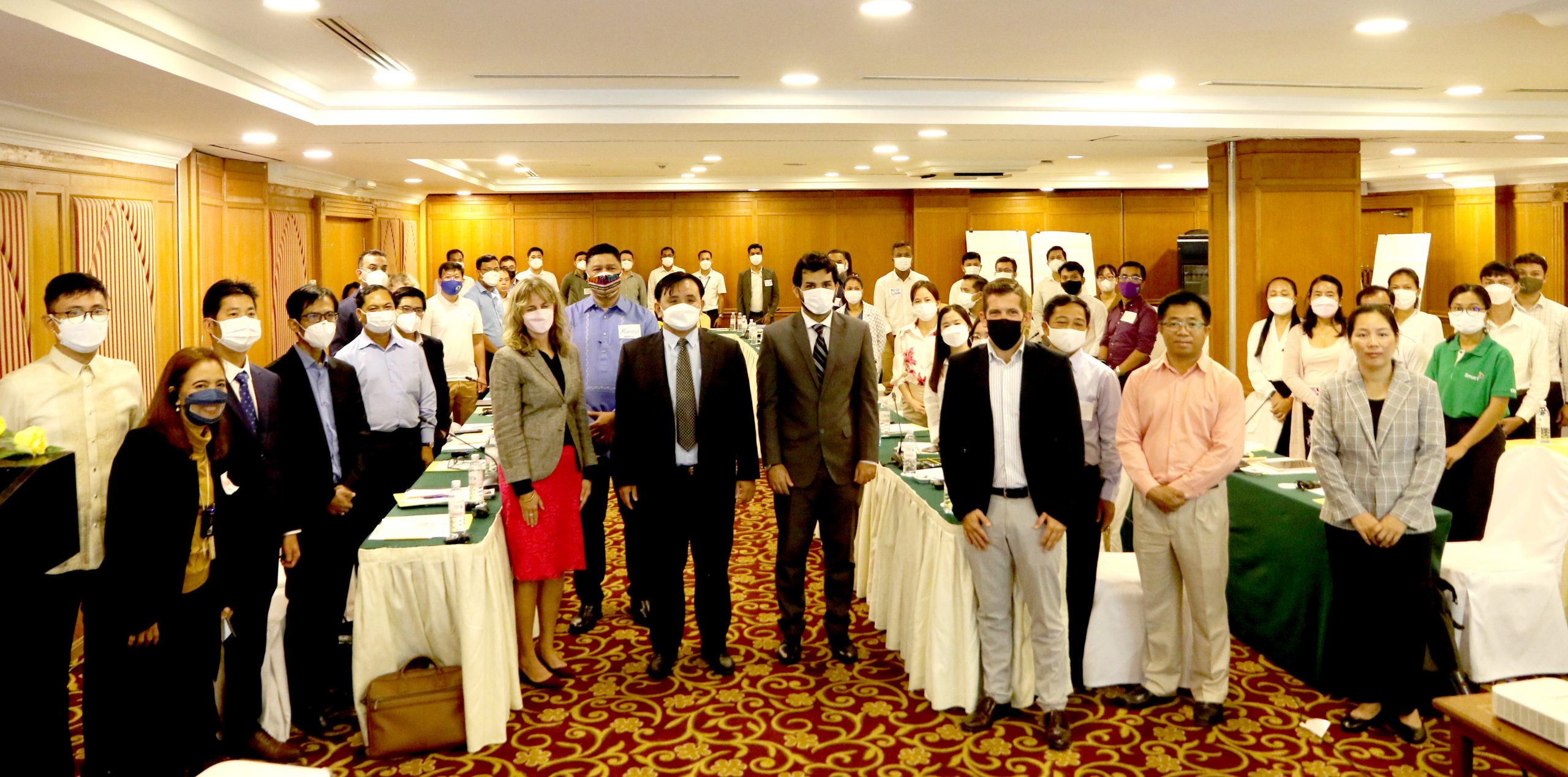
AMIC-UNESCO partnership promotes MIDL in Cambodia

The Asian Media Information and Communication Centre (AMIC) has partnered with UNESCO Phnom Penh to promote media, information and digital literacy (MIDL) in Cambodia. The project coincides with Cambodia’s launching of its policy frameworks for a digital economy, society, and government spanning the years 2021 to 2035.

Nominations now open for 2022 AMIC Asia Communication Awards

AMIC is pleased to announce that the 2022 AMIC Asia Communication Award is now open for nominations. Started in 2006, the Award recognizes outstanding achievements in Asian communication media.

Media Asia’s journal ranking improves, publishes issues ahead of schedule

By Danilo Araña Arao, Editor, Media Asia

Media Asia continues to improve journal ranking as it publishes issues ahead of schedule.

Based on Scimago Journal & Country Rank data as of April 2022 (Scimago Journal & Country Rank), the quarterly journal’s highest quartile ranking is pegged at Q2 (Linguistics and Language). Scimago’s metrics are based on Scopus data which compute Media Asia’s CiteScore 2021 at 0.5 (Scopus data).

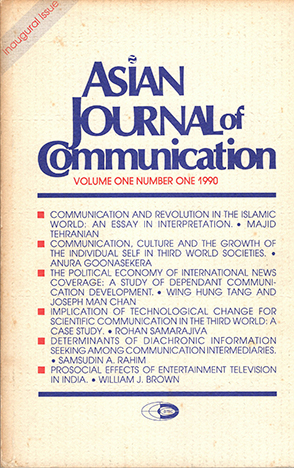
Asian Journal of Communication’s journal ranking improves, Vol. 32, 2022, Issue 3 uploaded

Asian Journal of Communication (AJC), Volume 32, 2022, Issue 3, is now up and accessible online, while the journal is earning steadily rising scores in citation performance or Impact Factor (IF), according to Dr. Peng Hwa Ang, Editor in Chief.

Peng Hwa Ang announced that the Impact Factor (IF) of AJC has been rising, indicating improved non-self citation performance of the journal over a period of three years—from 0.743 in 2019, to 1.893 in 2020, and 2.074 in 2021. (Source: Clarivate, Journal Citation Reports 2020-2022)

About the Asian Journal of Communication

By Dr. Peng Hwa Ang, Editor

The Asian Journal of Communication is the flagship publication of AMIC. It was visionary venture by pioneering member Eddie Kuo and former research director of AMIC the late Anura Goonasekara.

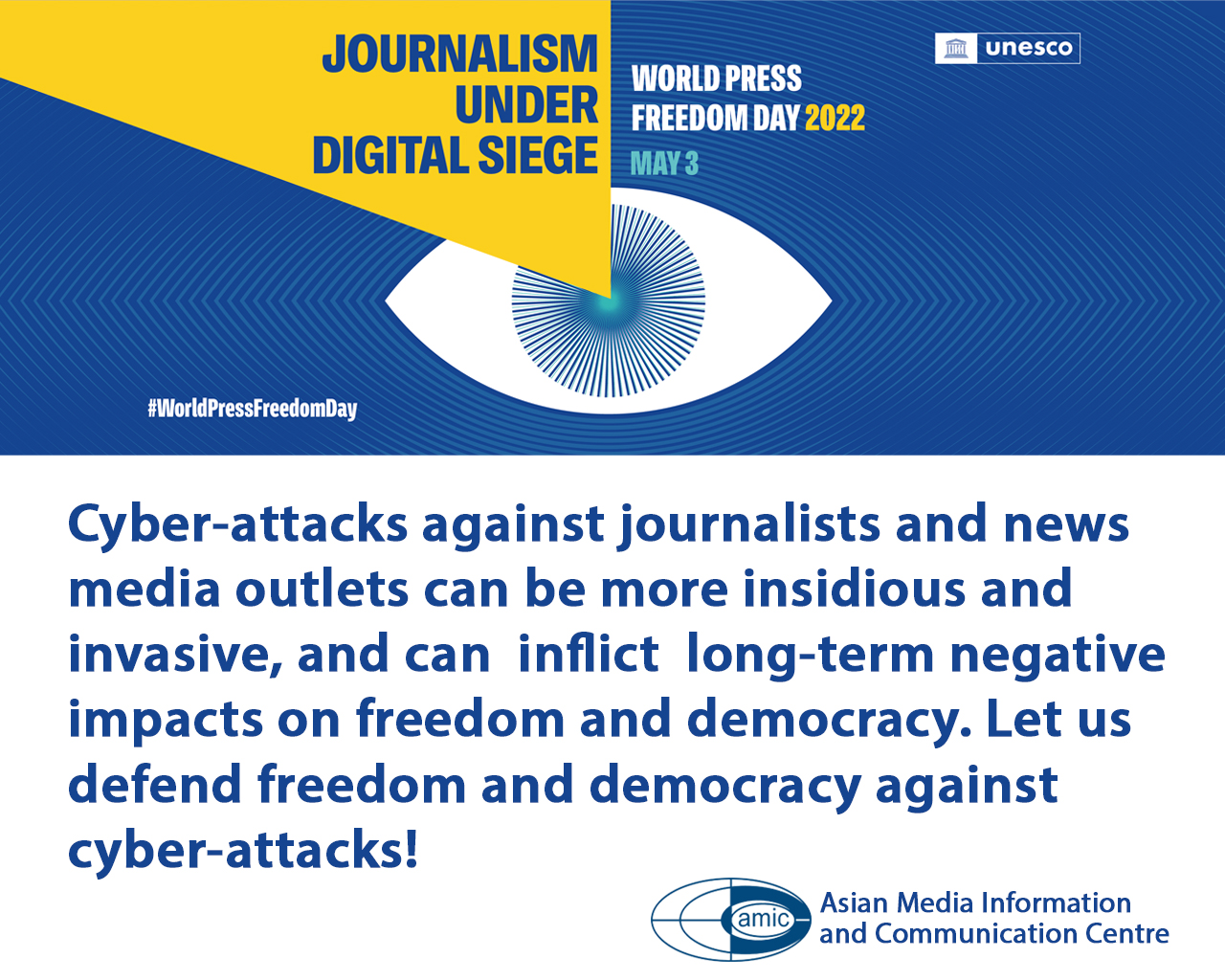
AMIC observes World Press Freedom Day

AMIC joined the global community in commemorating this year’s World Press Freedom Day (WPFD) on 03 May 2022.

World Press Freedom Day (WPFD) was conceived in 1993 to remind people all over the world of the need to protect and defend press freedom at all times, especially in challenging times.

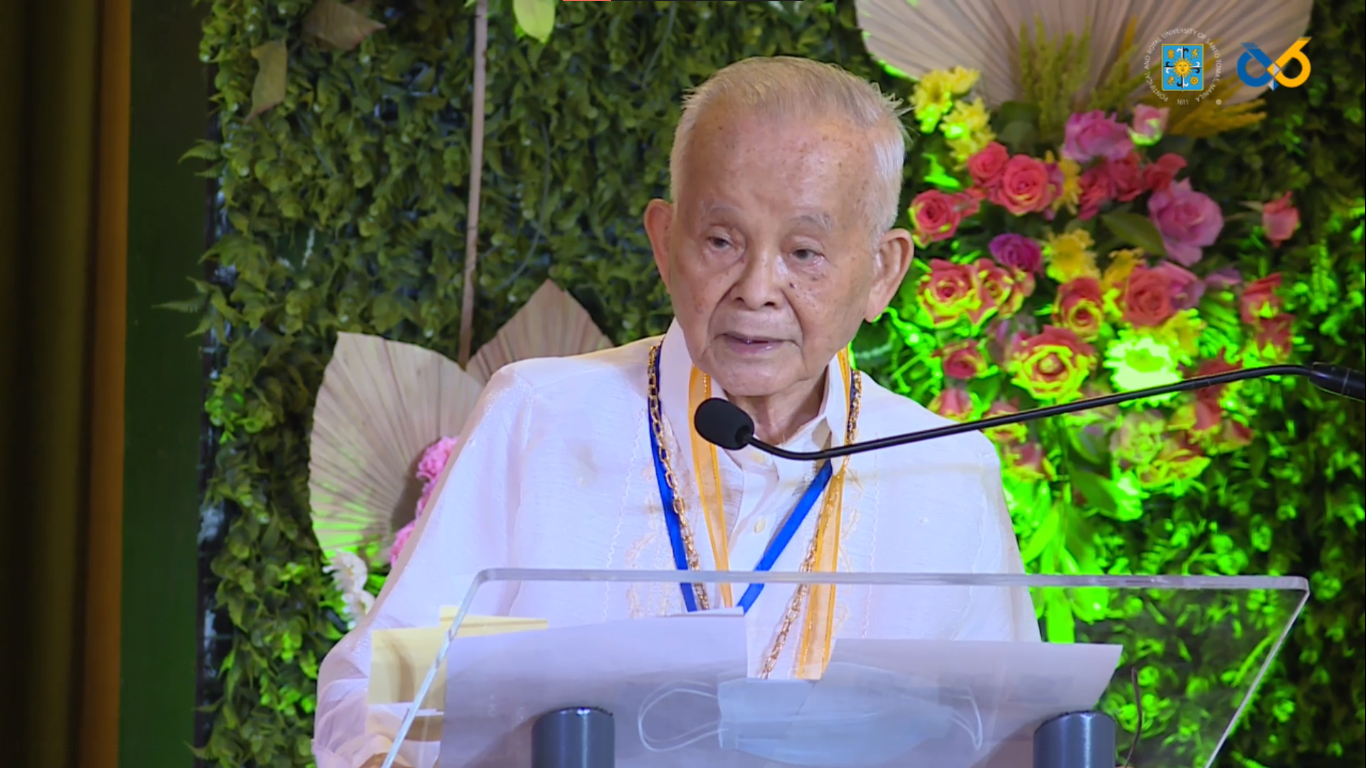
AMIC Board Chair gets Alumni Award

AMIC Board of Directors Chair Dr. Crispin C. Maslog received the 2022 Thomasian Outstanding Alumni (TOTAL) Award for Media. The Award is the highest honor bestowed by the University of Santo Tomas (UST) upon Thomasian Alumni in recognition of their significant and exemplary contribution to the society and the Church.

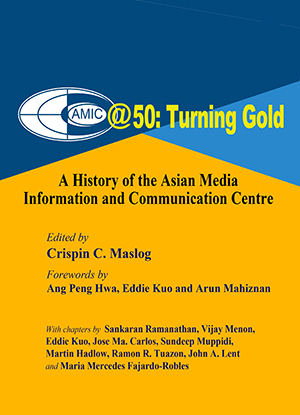
AMIC History Book Launched

AMIC@50: A History of the Asian Media Information Centre was launched last December on the occasion of AMIC’s golden jubilee. It is a 200-page story of the organization founded and registered in Singapore in 1971 and now based in Manila since 2015.

2021 AMIC Conference Book of Abstracts now Online

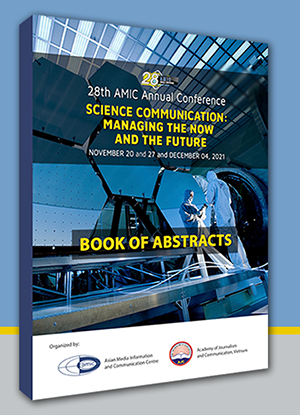
The 28th AMIC Annual Conference Science Communication: Managing the Now and the Future Book of Abstracts (2021) is now online. Please visit the AMIC Website to view and download a copy of the Book of Abstracts, available at https://amic.asia/amic-book-of-abstracts-2021/.

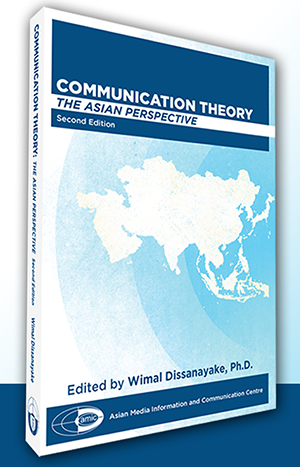
Communication Theory: The Asian Perspective 2022 edition launched

The 2022 edition of COMMUNICATION THEORY THE ASIAN PERSPECTIVE was launched on 04 December 2021, the last day of the 28th AMIC Annual Conference.

AMIC partners with JRE-IAMCR and AIJC in book launch

Asian Media Information and Communication Center (AMIC) in partnership with the Asian Institute of Journalism and Communication (AIJC) and the University of Pretoria sponsored the launching of the books produced by the Journalism Research and Education Section of the International Association for Media and Communication Research (IAMCR), on June 20, 2022. 

Moderated by Dr. Sadia Jamil (Chair, JRE Section), with Bruce Mutsvairo (Associate Professor, Utrecht University) as discussant, 10 books were presented at the online event.  

JRE Book Launch 2022

Message by Ramon R. Tuazon
Secretary General, Asian Media Information and Communication Centre (AMIC)

In our continuing war against disinformation, journalism education is our best defense. Today, we launch nine journalism and communication books which will be part of our truth defense tools.

New Books published by AMIC UAE  Country Representative

Dr. Sadia Jamil, AMIC Country Representative for the United Arab Emirates and Chair of the Journalism Research and Education Section of the International Association for Media and Communication Research (IAMCR), has announced the publication of three books that she has edited or co-edited.

Fifth CJEN Bangladesh Networking Conference held at ULAB

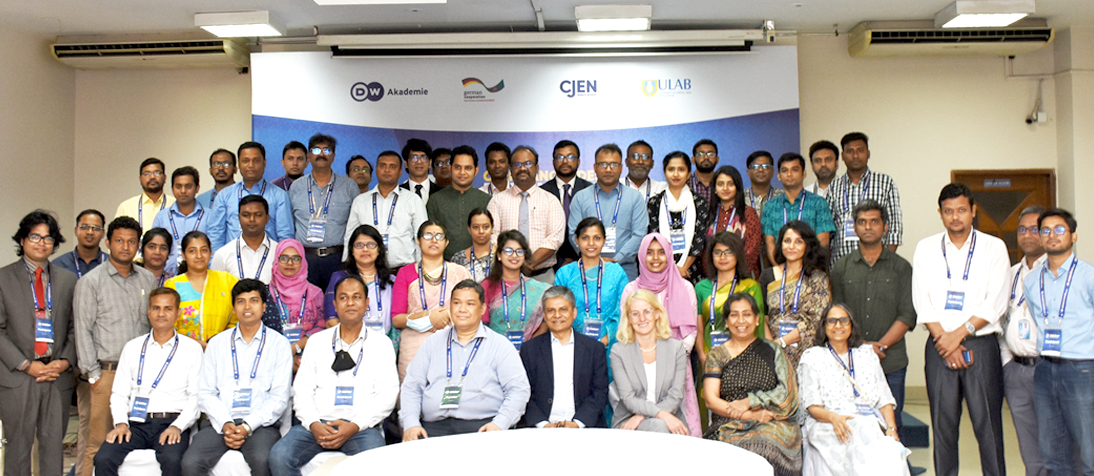
The Department of Media Studies and Journalism at University of Liberal Arts Bangladesh (ULAB) organized the conference titled, “Communication and Journalism Educators Network (CJEN) Bangladesh Fifth Networking Conference 2022” on 13 and 14 May 2022, where 67 educators and 20 students from different universities in the country participated. 

Professor Imran Rahman, ULAB Vice-Chancellor, in his opening speech said the authorities of the university had a strong commitment to promoting media in the country. So, the Media Studies and Journalism Department (MSJ) always tries to prepare its graduates by updating its courses and curriculum in consultation with stakeholders from the media industry on regular basis.