Sep 8, 2015 | Member Updates, News
 The Asian Media Information and Communication Center (AMIC) General Membership has ratified the selection of Manila as the new location for AMIC headquarters during its AMIC Annual General Membership (AGM) held on June 11, 2015.
The AMIC AGM is one of the highlights of the 24th AMIC International Conference held in Dubai, United Arab Emirates. The conference was hosted by the American University in Dubai (AUD).
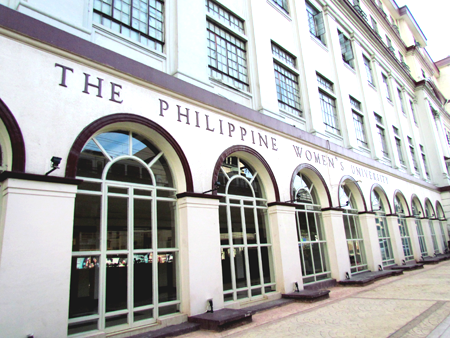
AMIC is now hosted by the consortium of the Philippine Women’s University (PWU)-Asian Institute of Journalism and Communication (AIJC).
The AMIC Board of Directors, composed of outstanding communication professionals and educators from the Asia-Pacific region, also announced the election of Dr. Crispin C. Maslog as new Board of Directors chairman.
Dr. Maslog is currently senior adviser and former vice president for academic affairs of AIJC. He will replace Arun Mahizhnan of Singapore.
With his appointment, Dr. Maslog comes full circle at AMIC. He was part of a select group of Asian scholars and practitioners who conceptualized AMIC in Singapore in 1971.
AIJC President Ramon R. Tuazon also assumed the post of secretary-general starting June 2015. He first served on an ad interim basis starting October 2014.
During the AMIC Annual General Membership, Tuazon presented the AMIC Strategic Plan (2015 & Beyond).
Among its programs are the revitalization of the AMIC international conference, revival of AMIC regional and sub-regional seminars and workshops, and textbook publishing.
AMIC will continue publishing the Asian Journal of Communication (ACJ) and Media Asia, two leading academic and professional publications in the Asia-Pacific region. Both are published by Taylor & Francis Group, a leading international academic publisher.
An independent, non-profit organization registered as charity in Singapore, AMIC has bloomed into the premier media research, publication, and information center in the Asia-Pacific region. With its transfer to Manila, it will also be registered at the Philippines Securities and Exchange Commission (SEC).
Since its founding in 1971, AMIC has been based in Singapore. From 1997 to 2014, it was based at Nanyang Technological University (NTU).

Sep 8, 2015 | AMIC Communication Awards
 Dr. Alan Hancock and Dr. David Robie, two prominent communication professionals, received the 2015 AMIC Communication Award during the 24th International AMIC Conference held in Dubai on June 10-13, 2014.
The 2015 AMIC Communication Award was also received by three longtime AMIC institutional collaborators: the Government of the Republic of Singapore, Friedrich Ebert Stiftung and Nanyang Technological University.
Dr. Alan Hancock of the United Kingdom received the award for“his meritorious lifetime contribution to communication education and research,institutional development and media advancement in Asia and internationally”.
From the 1960s, he was involved in many strategic interventions that impacted on educational media, and communication for social change and development in Asia.
From 1969-72, he was based in Kuala Lumpur, Malaysia where he initiated and coordinated UNESCO’s communication and media activities in the geographical region in the Pacific that stretch from Turkey to Japan.
He helped plan the establishment of the Asia-Pacific Institute for Broadcasting Development (AIBD), a regional training organization for media practitioners.
Dr. Hancock actively supported the establishment of the Asian Media Information and Communication Centre (AMIC) as a regional institution in 1971.
He helped plan and develop major national educational television and radio projects in Singapore, Malaysia and Thailand. He worked closely with universities in Malaysia, India and other countries to establish programs in communication research and education.
As Director of UNESCO’s key Communication Division in its Paris headquarters, Dr. Hancock initiated and provided technical expertise and funding support to establish many media and communication projects worldwide, especially in Asia and the Pacific.
While he had worked as television and radio producer at the British Broadcasting Corporation, Dr. Hancock earned eminent academic and publishing credentials at the East-West Communication Institute in Hawaii. He wrote and published extensively, initiating the first UNESCO World Communication Report.
He earned his doctorate from the Open University in the United Kingdom. Both his BA and MA qualifications are from Oxford University.
Meanwhile, New Zealand-based Prof. David Robie is the current Director of the Pacific Media Centre at the Auckland University of Technology where he made outstanding contributions in all award categories: Research, Education, Institution-Building and Excellence in Journalism.
He also has a journalistic background of over 40 years, with two decades focusing on such critical issues as human rights and environmental issues.
Professor David Robie is an A-ranked researcher, the highest rank for a university-based researcher in New Zealand.
In 2014, he received the Dean’s Award for Research Excellence for “Critic and Conscience of Society,” for the Pacific Media Centre’s Pacific Media Watch freedom regional project.
This year also sees a new edition of Professor Robie’s 1986 book, Eyes of Fire.
This republication marks the 30th anniversary of the bombing by French secret agents of Greenpeace’s MV Rainbow Warrior on July 10, 1985.
Professor Robie also wrote the book Don’t spoil my beautiful face, a tribute to human rights in the Asia-Pacific. It captured the struggles of the oppressed, and the pivotal role that journalism plays to bring about positive change.
As journalism educator, Professor Robie is helping develop critical, reflective and ethically-inclined journalism scholars.
In 2014, the Journalism Education Association of New Zealand (JEANZ) cited him for the “significant role (he has) played in fostering journalism and journalism education and research in the Asia Pacific Region.”
He was awarded the Faculty of Design and Creative Technologies Award for Critic and Conscience of Society (2014); Dean’s Award for Research Excellence (2012); Vice Chancellor’s Award for Excellence in Teaching (2011); and Creative Stimulus Award for innovation in covering “hot topics” in the Pacific Journalism Review research journal (2010).
In 2005, he received from the Pacific Islands Media Association (PIMA) the Pacific Media Freedom Award for an “outstanding contribution to the growth and development of journalists in the Pacific and New Zealand” (2005).
Sep 8, 2015 | AMIC Communication Awards
The Asian Media Information and Communication Centre (AMIC) has given its special AMIC Asia Communication Award 2015 to three long-time partners that have consistently supported the organization since its birth in 1971.
Awarded were the Government of the Republic of Singapore, the Friedrich Ebert Stiftung (FES), and the Nanyang Technological University (NTU).
The AMIC Asia Communication Award is a yearly award given to outstanding personalities in Asian media and communication. Awardees are chosen based on a decision of a jury of AMIC Board members.
By contributing to AMIC’s growth as an organization,the three institutions have promoted the cause of Asian media and communication.
The award was given on June 10, 2015 during the gala dinner for the 24th AMIC International Conference hosted by the American University in Dubai, United Arab Emirates.
Founded in 1971, AMIC established its first headquarters office in Singapore, with support from various partners, including the Government of Singapore, FES and NTU. AMIC remained in Singapore until 2014.
The Singaporean government provided AMIC with its first research, administration, and library facility at #39 Newton Road. It also subsequently sustained its logistical and financial support to enable AMIC develop its activities and programs.
Meanwhile, since 1971, FES actively fundedAMIC’s activities, including conferences, research, publishing, education, and project implementation.
FES funded AMIC’s journals, monographs, and conference programs for 40 more years. It also provided full-time senior research staff, visiting scholars, and specialists to help AMIC develop its regional membership base.
It has consistently provided AMIC with vital intellectual and infrastructural capacity over an extended period, and remains committed to AMIC as an international collaborator.
FES is a non-profit German political foundation that advances the basic values of social democracy through education, research, and international cooperation.
FES was founded in 1925. It is named after Friedrich Ebert, Germany’s first democratically elected president.
For nearly 20 years, the NTUhas hosted the AMIC’s regional headquarters within its Wee Kim Wee School of Communication and Information (WKWSCI). The University made available extensive office, library, and seminar facilities for AMIC’s operations.
With its generous annual grant, NTU enabled AMIC to recruit and retain staff members from Singapore and the international community. It expanded with in the Asia-Pacific region and beyond with its programs, projects, publications, and recruitment of members.
AMIC and NTU’s WKWSCI also jointly published peer-reviewed journals and monographs. As partners, AMIC opened its extensive Asian Media Resource Library to the WKWSCI.
With assistance from the Singaporean government, FES, NTU and other collaborators, AMIC evolved as an international, not-for-profit, nongovernmental organization that is now a regional research hub for media and communication studies.
AMIC encourages ethical practices and social responsibility in media and communication. It promotes democratic access and participation in media development and production by empowering disadvantaged sectors in Asia’s developing countries.
Sep 8, 2015 | AMIC Communication Awards
Filipino journalist and communication practitioner Juan L. Mercado has received the 2014 AMIC Communication Award.
Mercado is founding Director and Trustee of thePress Foundation of Asiaand founding Director of the Philippines Press Institute. He is an illustrious pioneer in the field of Asian journalism and mass communication.
Mercado started his illustrious journalism career in the 1950s as a reporter with the Cebu daily newspaper, the Southern Star. He became an associate editor of the same paper before joining the Evening News in Manila.
He was based at the United Nations in New York for the Evening News (1961-1963). Upon returning to the Philippines, he worked as Manila-based correspondent for several foreign publications.
Mercado co-founded Depth Newsas a ground-breaking service of the Press Foundation of Asiain the 1960s. Depth News provided development news and features to newspapers and radio stations in Asia and the developing world. It was active for more than 20 years.
Mercado was founding Director of the Philippine Press Institute, and co-founded the Philippine Press Council.
In 1972, Juan L. Mercado was detained with 21 other journalists when martial law was declared by then Philippine President Ferdinand Marcos. While no charges against him were ever filed, Mercado and the other detained journalists were kept under city arrest. During this period, he edited several ‘underground’ newspapers.
After his release in 1975, Mercado joined the United Nations as Communication Director of the Food and Agriculture Organization (FAO) regional office in Thailandand later at the FAO headquarters in Rome, Italy.
After the 1986 People Power Revolution in the Philippines, and after 19 years of UN service, Mercado returned home and resumed his media work. He continues to write as one of Manila’s leading newspaper columnists to this day.
Sep 8, 2015 | AMIC Communication Awards
Filipino journalist and communication practitioner Juan L. Mercado has received the 2014 AMIC Communication Award.
Mercado is founding Director and Trustee of the Press Foundation of Asia and founding Director of the Philippines Press Institute. He is an illustrious pioneer in the field of Asian journalism and mass communication.
Mercado started his illustrious journalism career in the 1950s as a reporter with the Cebu daily newspaper, the Southern Star. He became an associate editor of the same paper before joining the Evening News in Manila.
He was based at the United Nations in New York for the Evening News (1961-1963). Upon returning to the Philippines, he worked as Manila-based correspondent for several foreign publications.
Mercado co-founded Depth News as a ground-breaking service of the Press Foundation of Asia in the 1960s. Depth News provided development news and features to newspapers and radio stations in Asia and the developing world. It was active for more than 20 years.
Mercado was founding Director of the Philippine Press Institute, and co-founded the Philippine Press Council.
In 1972, Juan L. Mercado was detained with 21 other journalists when martial law was declared by then Philippine President Ferdinand Marcos. While no charges against him were ever filed, Mercado and the other detained journalists were kept under city arrest. During this period, he editedseveral ‘underground’ newspapers.
After his release in 1975, Mercado joined the United Nations as Communication Director of the Food and Agriculture Organization (FAO) regional office in Thailand and later at the FAO headquarters in Rome, Italy.
After the 1986 People Power Revolution in the Philippines, and after 19 years of UN service, Mercado returned home and resumed his media work. He continues to write as one of Manila’s leading newspaper columnists to this day.
