AI expert: Education on AI Ethics and Regulation needed

AI expert: Education on AI Ethics and Regulation needed

AI expert: Education on AI Ethics and Regulation needed

A global expert on Artificial Intelligence and cybersecurity said people need to be educated on the ethical use of technology for society to counter the malicious threats posed by AI.

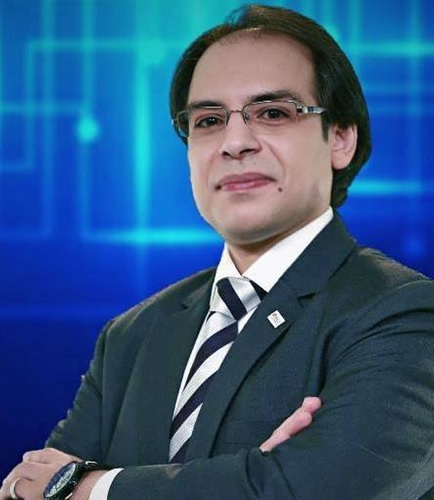
Dr. Mohamed El-Guindy, Cybersecurity Expert at the UN Office on Drugs and Crime and ICT Consultant at UNESCO, spoke at the webinar, “Malicious Use of Artificial Intelligence: Legal and Ethical Implications,” held last October, the first in a series on the topic, sponsored by the Asian Media Information and Communication Centre (AMIC).

AI, the science that enables machines to think and do tasks in complex environments without constant human supervision or being explicitly programmed, is reshaping our lives and the global economy, he said.

These computer systems are fed with data, which are then stored in large databases, controlled by private sector, used to train AI, linked to identities, user IPs, devices, etc., and sold to data brokers, advertisers, governments, friends and foes.

Data is the “new oil” that fuels the digital economy, he said.

AI has been used for good—in education, business, medicine, communication, transportation, crime prevention, and almost all facets of modern life.

Yet AI has also engendered new issues in privacy, security, social bias, social equality, and integrity of mediated information.

“Privacy is an issue now in the cyber world. Crime is on the rise in the cyber world, because people are not aware” of what these systems can do to them.

“From the security perspective, these apps can steal your info, can be used in accessing sensitive data on your device.”

Balancing pre-crime detection with human rights of suspects is another issue, because computer systems programmers can have bias against certain groups.

“We are not guaranteed that these AI are giving us the right direction…And this is important because we are dealing with human rights… the privacy of people, human dignity itself.”

He observed that AI will radically change media–like movies using AI instead of actors, TV shows presented by AI robots instead of TV anchors, and media being used to spread fake information.

He said young people are most vulnerable to fake information because of their heavy dependence on social media rather than traditional media for their information needs.

Technology is changing media theories, as machines are now able to send you things that do not exist, he said.

So we need media scholars and students to study the effect of AI on the media industry and to train people who design the algorithm and also audit the algorithm design and usage, he added.

Colleges and universities need to teach the legal and ethical aspects of AI, and not just the technology itself, he said.

In addition, regulation of AI is still a big debate, because while AI is being designed by the private sector, governments do not have the power to interfere due to lack of technological understanding.

Some governments favor regulation, like the UK and the European Commission which have enacted laws on AI. Others, like the United States, argue against it, saying regulation stifles innovation and creativity.

The European Commission has identified seven principles for ethical AI systems ethics and regulation: human agency and oversight, technical robustness and safety, privacy and data governance, transparency, diversity/non-discrimination/fairness, societal and environmental well-being, and accountability.

The webinar was attended by 180 participants from nine countries.

AMIC Country Representative edits newly launched Bengali daily

AMIC Country Representative edits newly launched Bengali daily

AMIC Country Representative edits newly launched Bengali daily

Ajker Patrika, a daily hit the market in Bangladesh on 27 June 2021 and became third highest circulated newspaper in four months of its inception.

A Bengali daily with a slogan, “Country’s Local Newspaper,” with 10 editions became popular among families in the country. Ajker Patrika publishes the highest number of regional editions emphasizing regional news to cater its local readers in the country.

Keeping proximity as a focus, the paper strives to provide the readers with relevant news, as well as investigate and explain news and events in detail. The paper has a working force of about 550 people, along with a network of 350 correspondents across the country. The paper is equally popular with its e-paper and online services.

A group of young, enthusiastic journalists and business professionals have joined the ranks and are led by industry veterans with many years of domain knowledge and experience. The Editor of Ajker Patrika Professor Dr. Md. Golam Rahman is a leading educationist, media researcher and communication expert of Bangladesh. He has served as the Chief Information Commissioner of Government of Bangladesh and also served as the Chairman of Bangladesh Sangbad Sangstha (BSS), a national news agency as well as the Chairman of the Department of Mass Communication and Journalism of University of Dhaka. He taught about four decades in the university.

Ajker Patrika has introduced a section called ‘fact-checking,’ because of fake information that are occupied in social media. The paper adopts a multilevel fact-checking process to confirm the overall authenticity of the news before publishing it on the print or digital platform. The paper maintains its Ethics Policy.

Ajker Patrika belongs to Bijoy Bangla Limited and is a sister concern of US-Bangla Airlines.

AMIC SG participates in 2022 Global MIL Week Celebration

AMIC SG participates in 2022 Global MIL Week Celebration

AMIC SG participates in 2022 Global MIL Week Celebration

AMIC Secretary General Ramon R. Tuazon spoke in several global and regional events commemorating the 2022 Global Media and Information Literacy Week.

The celebration was from 24-31 October 2022 with the global theme, “Nurturing Trust: A Media and Information Literacy Imperative.” The main commemorative events were held in Abuja, Nigeria. Additional commemorative events were held in November 2022.

Tuazon was the sole speaker in the session, “Media Audiences and Citizens” on 14 October 2022 on the Short-Term Programme on Media and Information Literacy for Trainers organized by the Indira Gandhi National Open University-UNESCO.

In his talk, Mr. Tuazon highlighted the communication rights of citizens, e.g., right to expression and information, right to privacy, and even the “right to be forgotten.” He reminded the participants of the media responsibilities of citizens to protect and defend independent media, resist information disorder, and support community media.

As virtual panelist for the session on “Global Conversation with Teachers on Media and Information Literacy and Trust” held on 26 October, SG Tuazon recalled several creative and innovative strategies in MIL education in selected Asian countries. This session was part of several parallel sessions in Nigeria. 

Tuazon was panel chairperson and plenary speaker at the forum “Bridging Digital Divides and Empowering Digital Competencies in the Asia-Pacific” which was held on 7-8 November 2022 and convened by UNESCO Bangkok Office. He was chairman of the Parallel Session 6B: “Youth Engagement and Joint Efforts for MIL Education in Southeast Asian Countries.” He presented the session overview and framework to guide the discussion of the parallel session.

Tuazon also reminded participants that digital literacy has been included as among the three main elements of Media and Information Literacy (MIL). The two others are media literacy and information literacy.

As plenary speaker for Plenary Session 07, “Policies and Approaches for Developing Media and Information  Literacy (MIL),” Tuazon gave a summary of MIL policy issues and options. In his presentation, he discussed the importance of public policies and the desired standards in public policymaking. He also noted that other sectors, e.g., business and industry, civil society, academe are also engaged in policymaking. He identified the different policy areas that these sectors should address.

According to Tuazon, while we recognize the overarching importance of MIL public policies, we should recognize the emerging dominating power and influence of the private sector especially transnational telecommunications companies.  Meanwhile, among the challenges in crafting MIL policies is the absence of baseline data on MIL competencies, which hinders the development of  informed, evidence-based policies and programs. 

SG Tuazon was one of the three resource persons for the “UNESCO Myanmar Education Webinar Series: Enhancing MIL and Digital Literacy Skills among the Teachers and Youths.” The webinar was held on 09 December 2022. His presentations focused on the principles of MIL and the integration of MIL competencies in teaching learning activities and classroom practices.

SG Tuazon is co-author of the MIL Curriculum for Teachers (UNESCO, 2011) and its 2nd edition, Media and Information Literate Citizens: Think Critically, Click Wisely (UNESCO, 2021). 

New country reps named

New country reps named

New country reps named

The following are the newly appointed AMIC country representatives:

Christine Faith M. Avila
AMIC Country Representative for Philippines (Mindanao)

Dr. Christine Faith M. Avila is associate professor, Communication Program, Ateneo de Davao University. She graduated with a doctorate degree in Communication at the University of the Philippines Open University. A marketing communications practitioner, she has experience in managing external communications, such as advertising and public relations works for banking and hospitalities.

As a former practitioner and now educator, she has been handling professional subjects related to her profession such as Communication Theory, Integrated Marketing Communication, Knowledge Management, Virtual Communication and Communication Internship. She is also an active communication researcher presenting papers at local and international conferences.

She is one of the pioneering members and former president of the Media Educators of Mindanao from 2019 to 2021. She worked with the Commission of Higher Education as part of the Regional Quality Assessor Team (RQAT), checking and monitoring the educational standards of various curricula for their communication programs.

She served as the Public Information Officer and the Communication Discipline representative in the Council of Educators of Deans for Arts and Sciences (CEDAS) in Region XI from 2020 to 2022. Currently, she is the country representative for Mindanao at the Asian Media Communication Center (AMIC). More than an educator, she is a loving wife, a hands-on mom to two girls, and a life coach handling a network of women for 15 years and counting.

Dr. Earvin Charles Cabalquinto
AMIC Country Representative for Australia

Lecturer in Communication, School of Communication and Creative Arts (SCCA), Faculty of Arts and Education Member, Alfred Deakin Institute for Citizenship and Globalisation Honorary Visiting Fellow, Humanities Research Centre, Australian National University Research Affiliate, Centre of Excellence in Research on Ageing and Care (CoE AgeCare), University of Jyväskylä, Finland Social Media Editor, Asian Journal of Communication Editorial Board Member, International Journal of Cultural Studies.

Recent publications:

Between existential mobility and intimacy 5.0: Translocal care in pandemic times“, Media, Culture & Society Without technology we’d be very stuck”: Ageing migrants’ differential (im)mobile practices during a lockdown, Media International Australia.

“Come on, put Viber, we can drink coffee together.”: Performing (im)mobile intimacy in turbulent times among aging migrants, Communication, Culture & Critique

Care within or out of reach: Fantasies of care and connectivity in the time of the COVID-19 pandemic, Viral Loads: Anthropologies of urgency in the time of COVID-19.Migrant platformed subjectivity: Rethinking the mediation of transnational affective economies via digital connectivity servicesInternational Journal of Cultural Studies.

For a full list of publications, visit my Academic website

Connect with me via Twitter

Deakin University
221 Burwood Hwy, Burwood VIC 3125
Phone: +61 3 924 46861
earvin.cabalquinto@deakin.edu.au
Deakin University CRICOS Provider

Code 001138

Pushpa Chhetri
AMIC Country Representative for Bhutan

Pushpa Chhetri is a social entrepreneur. She is a mother of two. She worked in Kuensel, the first and the only newspaper and now the only daily for 15 years.

She founded Bhutan Media and Communications Institute in 2011, the first private institute of its kind in Bhutan to contribute towards a professional development of Media and Communications Industry.

She was awarded Loden’s best Entrepreneur Award in 2016. She measures success in terms of social service and impact rather than financial returns.

Today, BMCI provides short trainings and consultancy services. It is also International Certification of Digital Literacy (ICDL) Asia’s local partner in Bhutan. ICDL is world’s leading computer certification program.

She believes that women can play a significant role in the economic development of the country through social entrepreneurship.

She is also a Member of the Journalists’ Association of Bhutan, Bhutan Association of Entrepreneurs and Bhutan Association of Women Entrepreneurs (BAOWE).

Mr. Laxman Datt Pant
AMIC Country Representative for Nepal

The Recipient of the “International Communication Excellence Award-2020,” Mr. Laxman Datt Pant serves as the Chairperson of Media Action Nepal.  In February, 2022, Pant was elected as one of the three Co-Chairs of the Media Freedom Coalition-Consultative Network (MFC-CN). An Adjunct Professor of Media Ethics at the Tbilisi State University in Georgia, he taught development journalism at the University of Dhaka in Bangladesh (2008-2009) and various courses of media studies at  Kathmandu University in Nepal (2010-2018). In addition to delivering guest lectures in the reputed Universities across the world, Pant worked as the Coordinator for Future Communicators’ Project, implemented by the School of Journalism of the Yunnan University, China (2019-2021).

A former UN Programme Specialist, Pant started his career as a journalist more than two decades ago and worked with numerous media institutions in different capacities ranging from a reporter to an editor.  Co-editor of the UNESCO research publication Supporting Safety of Journalists in Nepal: An Assessment Based on UNESCO‘s Safety Indicators- A Media Safety Landscape of Nepal (2016) , co-editor/lead researcher of the UNESCO/PMA study on Impact of COVID-19 on media freedom, journalist safety and media viability in Southeast Asia (2021), Pant also served as the Member of the Advisory Editorial Board/Author, IGI Global, USA for books titled “Combating Threats to Media Freedom and Journalist Safety (2020)” and “Discrimination, Gender Equality and Safety Risks in Journalism (2021)” .

A PhD Scholar in Media Ethics & Professionalism at the Infrastructure University, Malaysia, Pant holds extensive knowledge of the local, regional and international media environment.

Dr. Sadia Jamil
AMIC Country Representative for
United Arab Emirates and China

Dr. Sadia Jamil is an Assistant Professor at the School of International Communications, The University of Nottingham, Ningbo, China. She earned a PhD in Journalism (University of Queensland, Australia), a Master of Science in Media Management (University of Stirling, Scotland), and a M.A. in Mass Communication (University of Karachi). She has taught courses at the Khalifa University of Science and Technology, Abu Dhabi and in the past, at the University of Queensland, Australia.

Dr. Jamil is the Chair of the Journalism Research and Education Section of the International Association of Media & Communication Research (IAMCR). She is also the co-editor of IAMCR and Palgrave book series, the ‘Global Transformations in Media and Communication Book Series’. 

Dr. Jamil is one of the Ambassadors of Digital Poverty Alliance (DPA). She sits in the editorial boards of five leading international journals in the areas of journalism, digital media, political communication, and media practices in the Middle East. She is serving as honorary advisor of Media Action Nepal as well.

Rowena Capulong Reyes
AMIC Country Representative for Philippines

Rowena Capulong Reyes, PhD,  is Dean of the Institute of Arts and Sciences of Far Eastern University (FEU). Dr. Reyes holds the rank of professor at FEU, handling select communication and education courses on integrated marketing communication, community relations and social advocacy. Her scholarly work has covered spatial governance, associational life, social media, and marketing communication.

Prior to being appointed Dean, Reyes was FEU’s Manager of Marketing and Communication from 2014 until May 2019.

Reyes was recently appointed as Asian Media Information and Communication Center (AMIC) Philippines country representative for Luzon and executive committee member  of Asia Pacific Communication Alliance (APCA). She is the Ex-Officio and  immediate past  president of the Philippine Association of Communication Educators (PACE). She previously held the same position at the Public Relations Educators Association of the Philippines (PREAP) and was the former Dean of the College of Liberal Arts and Sciences of Colegio de San Juan de Letran, where she served as the founding director of the Institute of Communication.

Outside of academia, Reyes is a member of the Metro Manila Film Festival (MMFF) Executive

Committee and is designated Chair of the MMFF’s Education Committee. An accredited Public Relations counselor, Reyes is also a partner and managing director of 5 BC Integrated Marketing Communication.

Reyes holds a Ph.D. in Development Studies and a BA in Communication Arts from the University of Santo Tomas. She is also an alumna of the Asian Institute of Journalism and Communication, holding an MA in Communication Management.

Dr. Vu Thanh Van
AMIC Country Representative for Vietnam

Senior lecturer and director of International Cooperation Department at the Academy of Journalism and Communication (AJC), Vietnam. Former management positions include secretary of AJC Council, deputy dean of International Relations Faculty and deputy director of Research Department at AJC.

His specialization is in journalism and political science. In 2020, he contributed a paper entitled “The New Media Landscape and Challenge for Policy Communication in Vietnam” to the 13th volume of Comparative Studies of Public Administration XIII (Local governance in the age of technological transformation and global uncertainty.)

In 2021, he published the manuscript “Public Trust in Government and Compliance with Policy during COVID-19 Pandemic: Empirical Evidence from Vietnam” in Public Organization Review and “The COVID-19 Pandemic and Human Rights Limitation: The Role of Trust and Communication in Vietnam, in Asian Review. Vol 34 (2).

In 2022, he co-published “Gratitude“ in Journal of Marketing Theory and Practice.

He published a book entitled International Communications and co-wrote a book entitled Theory and Practice of Policy Communication. He also edited some publications, i.e. Policy communication: Vietnam and Korea’s experiences (2017), Public Policy communication and social consensus (2018), Policy communication and public reception literacy (2019); Managing Information on Social Media in the Context of Information Explosion (2021); and Technology for Policy Communication in 4.0 Era (2022), among others.

He was Fulbright scholar to University of South Carolina (2007) for the study of US institutes; exchange lecturer to Stockholm University (2012); visiting lecturer to Hamburg University (2015) and Vienna University (2018). He was trained in public administration and new public management at Civil Services College and Management Development Institute of Singapore, and in journalism at the Academy of Journalism and Communication (Vietnam).

E-mail: vanvuajc@gmail.com

AMIC Co-Organizes 3rd Mobile Studies Congress

AMIC oo-organizes 3rd Mobile Studies Congress

The 3rd Mobile Studies Congress was held on 09-11 December 2022 with the theme, “Go Mobile, Stay Innovative.” The in-person sessions were held at the School of International Communications, the University of Nottingham Ningbo China. Many other participants also attended online sessions. The Congress gathered over 150 participants from all over the world.

The Congress was organized by Institute of Mobile Studies (IMS), International and Mobile Innovation Network and Association (MINA). The co-organizers were University of Nottingham China, Zhejiang University, Swinburne University of Technology (Australia), and Asian Media Information and Communication Centre (AMIC).

The first Mobile Studies Congress with the theme, “Go Mobile, Stay Healthy,” was held on 13-15 November 2020 which was followed by the second Mobile Studies Congress with the theme, “Go Mobile, Stay Sustainable,” on 12-14 November 2021.

The congress is one of the annual events of IMS. The other event is Mobile Studies Summer School.

Since its inception in October 2019, IMS has been at the forefront in promoting and conducting mobile studies as an emerging field of scientific research. Areas of study include mobile media, mobilities, and mobile communications.

IMS has obtained its national and international reputation as the leader in mobile studies in higher education in China and one of the leaders in higher education globally.

This year’s congress had two pre-congress workshops: Workshop 1: DiVoMiner for Innovative Mobile Studies,” with Dr. Angus Cheong and Lawrence Dang as resource persons. This was held on 03 December 2022. Workshop 2 was “Micro-Documentary” (in Chinese) held on 4 December 2022 with Ms. Lei Chen as resource person. A Pre-Congress Partner Session consisting of four panel sessions was held on 08 December 2022.

The three-day congress consisted of four partner sessions inclusive of 21 panel sessions featuring diverse subjects such as digital divide and digital equity, mobile communication literacy, mobile health, mobile education/learning, intelligent communication, mobile creativity, mobile and smartphone filmmaking.

Day 03 also featured two Smartphone Film Forums. Two post-conference workshops were held on 17 December and 18 December with the themes, “Mobile Documentary Workshop” and “Mobile City Storytelling Workshop,respectively.

In his welcome speech, Founding Chair of Mobile Studies Congress Dr. Xiaoge Xu emphasized Mobile Studies Congress as a global annual event, aiming to promote mobile studies as an emerging field of research and to share experience and expertise in leveraging mobile for enhancing mobile communications.

Dr. Xu Xiaoge is also the Founding Director of Institute for Mobile Studies, School of International Communications and founder of the Mobile Studies International.

Dr. Sadia Jamil, Assistant Professor and Co-Director of the University of Nottingham Institute for Mobile Studies, and AMIC Country Representative for the United Arab Emirates and China, chaired the opening session and Keynote Session 1.  She also chaired the closing session of the Mobile Studies Congress.

According to Dr. Jamil, mobile phone technology is not just transforming individual’s routine life but also reshaping business practices and operational strategies in many sectors. She acknowledged the transformations brought by mobile phone technology and the need to broaden the research within this area, incorporating diverse areas of exploration including mobile economy, mobile health, mobile learning, mobile journalism, mobile filming, and mobile governance.

She further urged to recognize the issue of digital inequalities that continue to affect people’s usage of mobile phones for diverse purposes and influence the national governments’ progress towards the achievement of sustainable development goals.

AMIC Secretary General Ramon R. Tuazon spoke at the plenary for Keynote Session 2. In his presentation entitled, “Rediscovering Mobile Technology for the Common Good,Mr. Tuazon called the participants’ attention to the “imbalanced” interest in the application of mobiles as there seems to have many “blind spots.”

For example, academic papers or studies which feature the impact of mobiles in food security seem wanting amid worsening hunger gripping many countries today. Other blind spots include migration issues and the impact of mobile on democracy and human rights.

According to SG Tuazon, for democracy to move forward and to reverse authoritarianism we need access to accurate information, transparency, civic engagement, and digital inclusion. All these can be facilitated by appropriate use of mobile technology.