New Asia Pacific nonprofit takes up role of PJR publishing

New Asia Pacific nonprofit takes up role of PJR publishing

New Asia Pacific nonprofit takes up role of PJR publishing

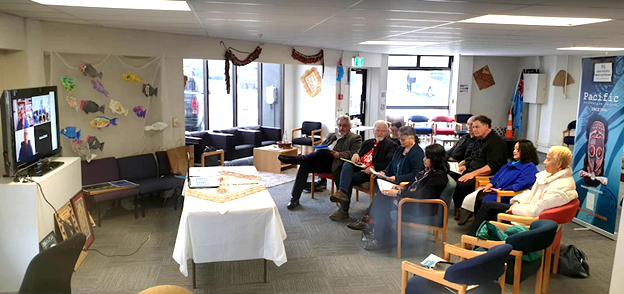
The inaugural annual general meeting of the Asia Pacific Media Network | Te  Koakoa Incorporated, publishers of Pacific Journalism Review. Image: Nik Naidu 

A new Asia Pacific nonprofit group has taken up the role of publishing the independent Pacific Journalism Review and other research and publication ventures.

The launch of the Asia Pacific Media Network | Te Koakoa Inc. has ensured the viability of the New Zealand-based 28-year-old journal that was founded at the University of Papua New Guinea in 1994.

The journal has a focus on Asia Pacific, Australia and New Zealand media research but also publishes widely on global issues.

Chair Dr. Heather Devere said the members of the network – mostly in Australia, Fiji and New Zealand – aimed to “show support and work for the benefit of First Nations and other communities in Aotearoa and the Asia-Pacific region.”

But, added Dr Devere, retired director of research practice of the National Centre for Peace and Conflict Studies (NCPACS): “The first and most urgent aim is to enable the continued publication of the non-profit media research journal Pacific Journalism Review”. 

The journal has already produced two double editions since becoming independent of its last host, Auckland University of Technology, which had followed the University of the South Pacific as publisher. https://ojs.aut.ac.nz/pacific-journalism-review/issue/archive

Professor David Robie, founding editor of the journal and who retired as AUT’s Pacific Media Centre (PMC) director in 2020, said he was “delighted” with this development and thanked colleagues for their support.

After organizing the establishment of the APMN, he is now deputy chair and is looking for new projects. He is also country representative of the Asian Media Information and Communication Centre (AMIC).

Dr. Devere said it was urgent to establish such a network “ to continue the work on Aotearoa New Zealand’s role in the Asia Pacific region following the demise of the Pacific Media Centre at AUT.”

There was no longer a space for those working on the PJR that was publishing research related to important and on-going issues in New Zealand’s immediate region.

Dr. Devere said there was no longer a focus of any New Zealand universities doing the work being done by APMN.

“While there is a current focus on Pacific Issues, there is no stable space for those working on media issues in the Asia Pacific region,” she said.

“There is also a conflict of interest between universities that are now functioning as commercial institutions and investigative journalism that is engaged in providing accurate and reliable information for citizens.”

More information about APMN
https://www.facebook.com/PacificJournalismReview

Contact: David Robie – davidrobie.nz@icloud.com

ASEAN ROADMAP 2025

ASEAN ROADMAP 2025

ASEAN ROADMAP 2025 to realize a common higher education space in Southeast Asia

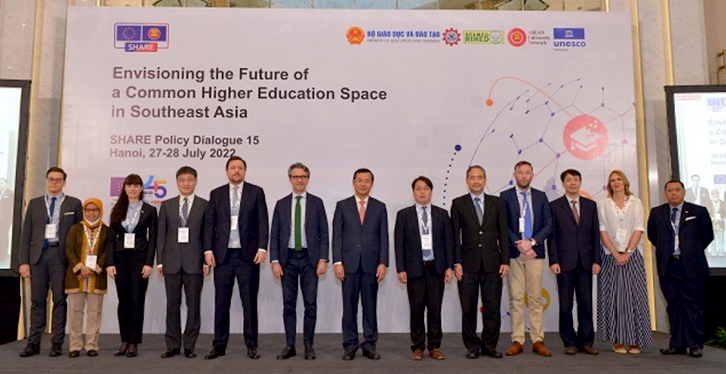
The ASEAN Secretariat, the EU Support to Higher Education in the ASEAN Region (SHARE) Programme, and the members of the ASEAN Working Group on Higher Education Mobility (AWGHEM) officially launched the ‘Roadmap on the ASEAN Higher Education Space 2025 and its Implementation Plan,’ on 27 July during 15th SHARE Policy Dialogue.

The launch was officiated by Dato’ Lim Jock Hoi, Secretary-General of ASEAN; Dr Nguyen Van Phuc, Deputy Minister of Education and Training, Viet Nam; and Giorgio Aliberti, EU Ambassador to Viet Nam.

The Roadmap on the ASEAN Higher Education Space 2025 contributes to the ASEAN Community Vision 2025 and the strengthening of future resilience through enhanced people-to-people connectivity and improved access and recognition of higher education in the ASEAN region. It envisages a resilient and sustainable ASEAN Higher Education Space that enables greater harmonization and internationalization of the region’s higher education systems.  It is reflective of the new reality for education worldwide, and proposes adaptive and sustainable approaches in responding to the changing context of higher education. This includes augmenting access and inclusion to internationalized higher education provision by students through digital transformation.

At the launch, Secretary-General Dato’ Lim Jock Hoi, stated that, “the ASEAN Secretariat recognizes the crucial importance of synergy and working together to ensure efficient use of resources and maximize impact of our initiatives in the region. The Roadmap on the ASEAN Higher Education Space and its Implementation Plan is also our attempt to synergize our work, consolidate our efforts, and appreciate the valuable work that has been done by the ASEAN Member States and regional partners on implementing a common higher education [space] in Southeast Asia.”

The SHARE Programme was launched in 2015. SHARE is the European Union’s flagship higher education programme with ASEAN and has worked alongside the ASEAN Secretariat and regional partners to strengthen regional cooperation and enhance the quality, regional competitiveness and internationalization of ASEAN Higher Education institutions and students.

The 15th SHARE Policy Dialogue, entitled ‘Envisioning the Future of a Higher Education Common Space in Southeast Asia,’ is co-hosted by the Ministry of Education and Training of Viet Nam and is organized in partnership with the Education, Youth, and Sports Division of the ASEAN Secretariat, SEAMEO RIHED, the ASEAN University Network, and UNESCO Asia and Pacific Regional Bureau for Education.

About the Asian Journal of Communication

About the Asian Journal of Communication

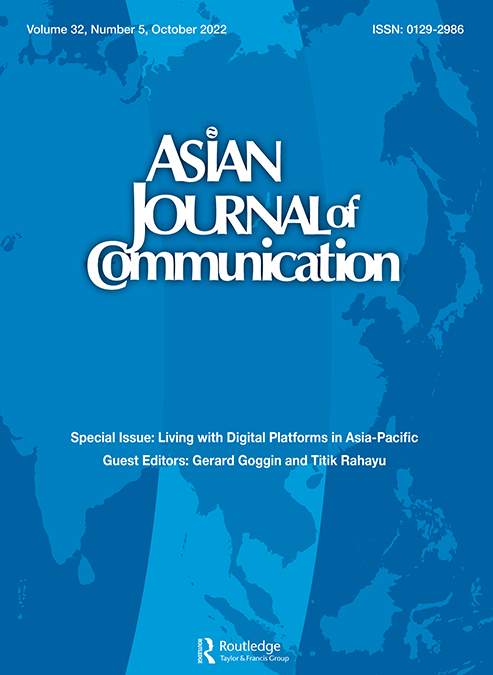
Asian Journal of Communication: The voice of communication theory, research, and education in Asia

By Peng Hwa Ang, Editor, Asian Journal of Communication

The Asian Journal of Communication is the flagship journal of AMIC. It was founded in 1990 by Professor Emeritus Eddie Kuo of Nanyang Technological University (NTU) and the late Anura Goonasekera, who was then Head of Research at the Asian Media Research and Information Centre, which later became AMIC.

They were visionary because communication as a field in academia was in its infancy in Asia. Since then, as the field of communication has grown and flourished, so has the journal. Today, it is published by Taylor & Francis and its annual revenue helps support the AMIC secretariat in Manila.

The Journal is jointly owned by NTU and AMIC. My colleague Xiaoming Hao took over as editor from Eddie Kuo in 2010. I was handed the editorship in 2019 when Hao retired. NTU’s support has been and continues to be substantial. Although it is entitled to half the royalties, it has not collected a cent; instead, I am given a course waiver as editor and a doctoral student is assigned as an editorial assistant.

Last year, we received some 450 submissions and this number looks to increase. Unfortunately, we can only publish fewer than 10% of the submissions. The high quality as a result of this filtering is a rising impact factor, currently at 2.074. If the joke about academic writing is that only the author’s mother reads, an IF of more than 2.0 suggests that someone other than the author’s mother is reading the journal. That’s heart-warming.

The rise of the impact factor could be attributable to the pandemic, when we, along with many other quality journals, received more submissions and citations than the year before. But it may also be due to our attempts to promote authors’ works over Facebook and Twitter. Our social media editor, Earvin Cabalquinto (Deakin University), has been instrumental in ensuring that every published article gets due exposure in those platforms.

Many of our authors are junior scholars, which augurs well for Asian communication scholarship. But they also need some handholding. For example, I have taken it on myself to go over manuscripts and edit them for readability.

The Journal continues, in the vision of the founders, to be a voice of Asia in communication. Being a journal oriented to a region, it would be pointless to try to “compete” globally. In fact, I have directed articles from my friends and colleagues to more internationally-focused journals.

So what is the Asian focus of the Asian Journal of Communication? The Journal is focused on theory. That is, submissions must critique, refine or extend theory. Merely confirming a theory is not enough. Using Asia as a test-bed or a source of data to confirm a theory is not enough. There must be contribution to theory and with an Asian connection. This is thought leadership with an Asian perspective.

For example, we have a special issue on anti-Asian racism. Interestingly, the associate editors advised that the guest editors should also include intra-Asian racism, that is racism by an Asian against another Asian.

Also in progress is one on Islamic communication research, led by Indonesian researchers. In Indonesia, academics in Islamic universities are calling the politicians to account. They are using Islamic norms on probity to address such issues as corruption. I thought it was important to bring to larger attention the contribution of our colleagues with a different tradition and background in communication.

The perspectives and approaches in Islamic communication research would, I imagine, be different from those we are familiar with in Western communication research. Such differences reflect the diversity in Asia and can only enrich our understanding of communication.

In the Western convention, many of the articles are quantitative, given  the centre of gravity in communication being the US. But I note that many Asian scholars write scholarly essays. I have appointed an associate editor, Terence Lee (Sheridan Institute), to consider such scholarly essays.

In the next issue, I will answer the commonly asked questions of how to get published in the AJC.

6TH WORLD JOURNALISM EDUCATION CONGRESS: Call for Abstracts

6TH WORLD JOURNALISM EDUCATION CONGRESS: Call for Abstracts

“Change and Continuity: Journalism Education in the Digital Era” is the theme of the 6th World Journalism Education Congress (WJEC). It will be held in Beijing, China, between July 6 and 8, 2023, with a post conference in Shanghai, China, on July 10, 2023.

The conference is being organized by the Communication University of China (CUC) in Beijing and the Shanghai International Studies University (SISU) in Shanghai. It follows the successful fifth congress held in Paris, France, in July 2019. For details see http://www.wjec.paris.

With the support and participation of journalism education organizations worldwide,* the Congress provides a necessary discussion forum on journalism education worldwide. The WJEC also supports and encourages the continuing evolution of journalism and journalism education around the globe. 

AREAS OF RESEARCH 

The WJEC is currently soliciting academic paper abstracts under the wide umbrella of journalism education. Accepted abstracts will be presented as refereed research papers at the forthcoming conference in Beijing, China. 

Although abstracts will be accepted on a variety of journalism and mass communication topics, submitters are encouraged to focus on the broader conference theme: “Change and Continuity: Journalism Education in the Digital Era.”

ABSTRACT SUBMISSION GUIDELINES

Deadlines: WJEC invites interested presenters to electronically submit abstracts only (minimum 500 words; maximum 800 words) by October 15, 2022

When submitting an abstract, please follow these steps:

  1. Go to the conference abstract submission platform (https://bit.ly/WJEC2023).
  2. Click on “Registration” in the Menu bar or click on “Create Account” in the Login Menu. It will take you to “Create New Account,” which is self-explanatory and guided. Finish signing up by confirming your email address.
  3. Once the account is set up, sign in using your email address and password.
  4. To submit the abstract, click on “Create a New Paper Submission.”
  5. The next step will require you to provide the title of the paper and an abstract (9,000 charactersmaximum). If your abstract’s character count exceeds 9,000 characters, you can also attach it as a doc or PDF file. However, you cannot leave the abstract box empty. Write a brief abstract or keywords for your paper if you choose to upload it as an attachment. The abstract should give a clear sense of the scope of the research, research objectives and methods of inquiry. If researchers have completed their projects by the submission deadline, paper abstracts must also include research results and discussion/conclusions.
  6. Next, you can add additional authors if there are any. You can add as many authors as you need.
  7. Finally, click the submit button to upload the abstract.
  8. You can log into the site at any time to check the status of your submission or if you need to edit something. But you can only do this up to the submission deadline of October 15, 2022. You will not be able to make any changes to your submission after the deadline.
  9. Full papers are due May 1, 2023, to be eligible for inclusion in the online conference proceedings. 

Also note the following:

  • Ensure that the document you upload does NOT include ANY information that identifies the author/s or his/her affiliation/s. Abstracts submitted with author identifiable information will automatically be removed from the pool of submissions and will not be considered for review or included in the conference program.
  • Ensure that you add ALL your name, affiliation, email address and other required information in the online system before uploading your paper abstract. This enables the conference organizers to keep track of individual authors and their abstracts. Ensure the email address you include is the one you want the paper chair to use to communicate with you about your submission and where you will receive a confirmation once you have successfully submitted your abstract.

Review process: A panel of international judges will blind-review all submissions. Paper selections will be finalized by the end of December 2022, and presenters will be informed. 

CONTACT

For more information about the 2023 WJEC in China, please contact:

For more information about the call for papers, please contact:

*The World Journalism Education Council (WJEC) is a coalition of 32 academic associations worldwide that are involved in journalism and mass communication at the university level. They include: African Council on Communication Education (ACCE), Arab-U.S. Association for Communication Educators, Asian Media Information and Communication Centre (AMIC), Association for Education in Journalism and Mass Communication (AEJMC), Association for Journalism Education (U.K.), Association of Schools of Journalism and Mass Communication (ASJMC), Brazilian Society of Interdisciplinary Studies on Communication (Intercom Brazil), Broadcast Education Association (BEA), Canadian Committee for Education in Journalism (CCEJ), Chinese Journalism Education Association, Chinese Communication Association (CCA), European Journalism Training Association (EJTA), Global Network for Professional Education in Journalism and Media (JourNet), Israel Communication Association, Japan Society for Studies in Journalism and Mass Communication (JSSJMC), Journalism Education and Research Association of Australia (JERAA), Journalism Education Association of New Zealand, Journalism Research and Education Section International Association of Media and Communication Research (IAMCR), Journalism Studies Section, European Communication Research and Education Association (ECREA), Korean Society for Journalism and Communication Studies, Latin American Association of Communication Researchers (ALAIC), Latin American Federation of Social Communication Schools (FELAFACS), Nigerian Association of Journalism and Mass Communication Teachers, Nordic Journalism Training Association, Philippine Association of Communication Educators (PACE), Russian Association for Education in Journalism, Russian Association for Film & Media Education, Saudi Association for Media & Communication, Scientific and Methodological Communication in Journalism and Information, South African Communication Association, French Speaking Journalism schools Théophraste Network.

Media Asia marks 50th year in 2023

Media Asia marks 50th year in 2023

Media Asia marks 50th year in 2023

By Danilo Araña Arao
Editor, Media Asia

Volume 50 in 2023. Next year is an important milestone for Media Asia as the quarterly peer reviewed journal marks its golden anniversary.

As of this writing, there are 18 accepted manuscripts lined up for next year, 17 of which have already been published online under the journal’s “online first” system. The editorial team has also planned the themes and sequencing of articles for the March and June 2023 issues and has started to line up articles for the September 2023 issue.

That the journal is publishing its issues ahead of schedule is due to the respectable turnaround time in handling manuscripts. Based on those included in Volume 49 (2022) and lined up in Volume 50 (2023), the average turnaround time from submission to online publication is 247.95 days for refereed Original Articles. As regards non-refereed Editorials, Commentaries and Reviews, it is pegged at 49.35 days.

Most submissions from 2020 to 2022 already have final editorial decisions (i.e., Accept, Reject, Withdrawn). There are only a few pending manuscripts submitted in 2020 (0.00%), 2021 (2.86%) and 2022 (13.43%). This means that only one out of every 10 submissions is currently being revised, edited or evaluated.

For manuscripts with final editorial decisions submitted so far from 2020 to 2022, the journal’s acceptance rates are computed at 10.57% for refereed manuscripts and 41.97% for non-refereed ones.

Based on the full calendar year data, new manuscript submissions increased by 209.68% in 2020 and 191.67% in 2021 compared to the respective previous years. For the full calendar year of 2022, the number of submissions is projected to be the same as 2021 even if there were no new calls for papers in 2022.

As the journal marks its 50th year in 2023, the editorial board remains committed to further improving the journal’s reputation globally.

The journal’s editorial board is composed of nine women and three men who are based in nine locations in Asia, Europe and North America. At present, the Editor is Danilo Araña Arao (University of the Philippines Diliman, Philippines). The Associate Editors are Lisa Brooten (Southern Illinois University Carbondale, USA), Roselyn Du (California State University Fullerton, USA), Paromita Pain (University of Nevada Reno, USA), Ma. Theresa M. Rivera (Far Eastern University Manila, Philippines) and Nick Y. Zhang (Hong Kong Baptist University, Hong Kong). The members of the Editorial Advisory Board are Sarah Cardey (University of Reading, UK), Ataharul Chowdhury (University of Guelph, Canada), Minjeong Kim (Hankuk University of Foreign Studies, South Korea), Eunice Barbara C. Novio (Vongchavalitkul University, Thailand), Sheau-Wen Ong (Wenzhou-Kean University, China) and Deborah N. Simorangkir (Swiss German University, Indonesia).

Published since 1974, Media Asia is a peer reviewed quarterly journal that focuses on practices in journalism, advertising, public relations, entertainment and other aspects of media in Asia. It publishes relevant media-related studies in Asia like freedom, ethics, working conditions, ownership, campus press, community press, corporate media, alternative media, literacy, language and culture of impunity.