AMIC announces 2023 and 2024 AMIC Asia Communication Awardees

AMIC announces 2023 and 2024 AMIC Asia Communication Awardees

AMIC announces 2023 and 2024 AMIC Asia Communication Awardees

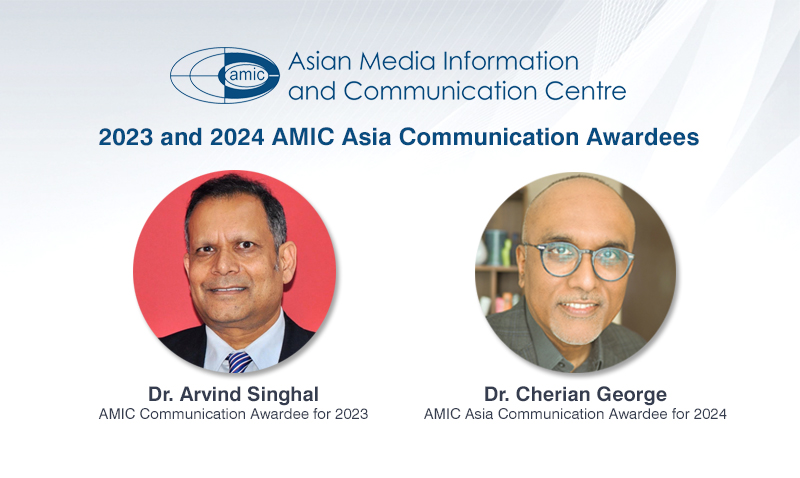
Asian Media Information and Communication Centre (AMIC) announces the selection of two Asian communication icons as recipients of the 2023 and 2024 AMIC Asia Communication Award.

The Award honors outstanding Asians who have made significant contributions to the Asian and global communication setting, said Dr. Crispin C. Maslog, chairperson of the AMIC Board of Directors.

The awardees are Dr. Arvind Singhal, professor at the University of Texas at El Paso, and Dr. Cherian George of the Hong Kong Baptist University.

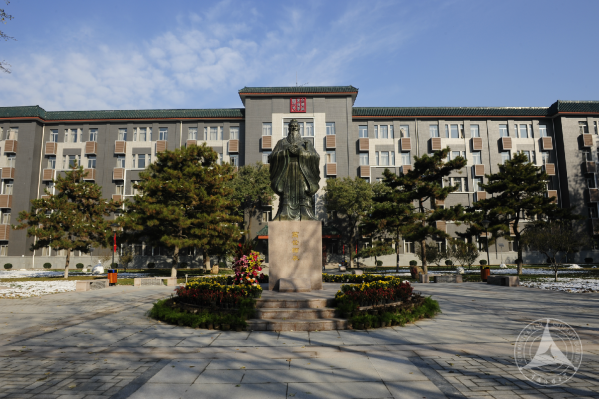
The conferment will be held at the opening of the 30th AMIC Annual Conference to be hosted by the Communication University of China in Beijing, September 24 – 26 .

Dr. Arvind Singhal, AMIC Communication Awardee for 2023, is recognized for his important contribution to communication education, research, publications, and extension work. “The communication paradigms and strategies now etched in our toolbox have been enriched by Dr. Singhal’s four decades’ worth of contributions,” says the AMIC Award citation.

Dr. Singhal is known internationally for his research on the diffusion of innovations, entertainment-education strategy, positive deviance approach to social change, development communication, and liberating interactional structures.

He has led 34 funded research projects on these areas in many countries in Asia and other continents. He is currently the Samuel and Edna Marston Endowed Professor of Communication at The University of Texas at El Paso.

Dr. Cherian George, AMIC Asia Communication Awardee for 2024, is recognized for his work in journalism, academia, communication and media research, and socio-political advocacy, which he has accomplished “with excellence, integrity, and a deep understanding of the Asian contexts.”

Before transitioning to academia, Dr.  George had a distinguished career in journalism in Singapore where he set high standards for investigative reporting and insightful commentary. This has accorded him a solid foundation in pursuing journalism education, communication, and media studies. He is currently a journalism professor at Hong Kong Baptist University.

AMIC established the AMIC Asia Communication Award in 2006 and has since conferred the award to 23 communication scholars, educators, and practitioners.

AMIC holds 30th Annual Conference in Beijing

AMIC holds 30th Annual Conference in Beijing

AMIC holds 30th Annual Conference in Beijing

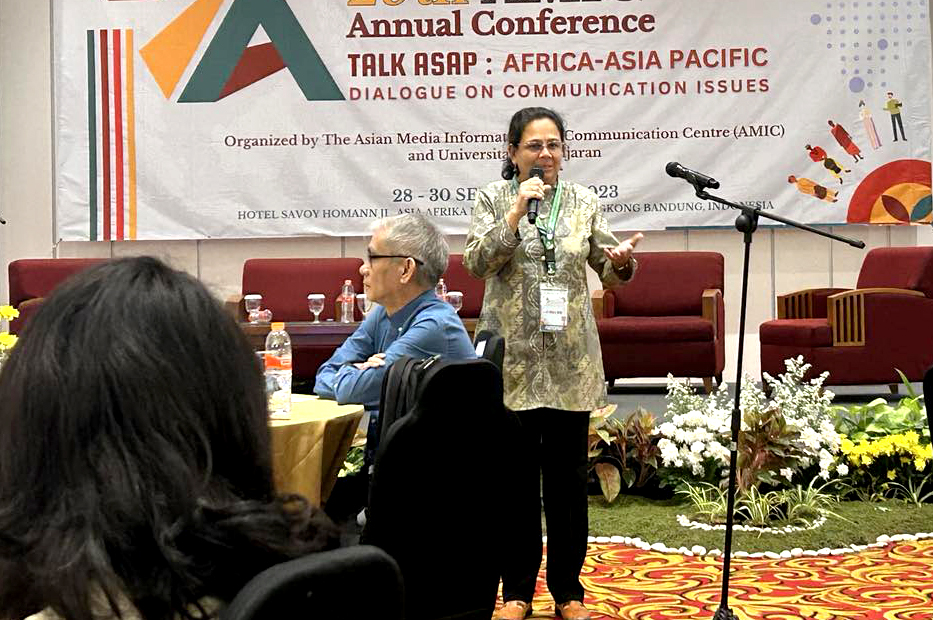
Communication and journalism educators, scholars, and practitioners will meet at the Communication University of China (CUC) in Beijing for the 30th Annual Conference of the Asian Media Information and Communication Centre (AMIC), September 24 to 26 .

This year’s conference theme celebrates the rich and colorful diversity of Asian culture, highlighting one common value, “Asia as a (Knowledge) Sharing Society.” It will take a closer look at how Asian communication and journalism schools can collaborate so that they can reap the benefits of the internationalization of higher education, said Dr. Crispin C. Maslog, chair of the AMIC Board of Directors.   

He added that this year, the 53-year-old AMIC takes a giant step toward achieving its vision “to be truly Asian” as it welcomes colleagues from diverse sub-regions of Asia, such as Central Asia, East Asia, Southeast Asia, North Asia, Oceana and the Pacific, South Asia, and West Asia.

The event features four plenary sessions on the following topics: Updates on Internationalization of Higher Education in Asia; Journalism and Communication Education: Asia’s Best Practices; Journalism Issues Across Asia: Commonalities & Differences; and The Bandung Spirit in the Era of AI, Meeting 2.0.

Some 20 parallel sessions will be held, featuring almost 200 papers on Artificial Intelligence, Media and Information Literacy, Health Communication, Environment and Sustainable Development Communication, Communication and Culture, and Freedom of Expression. There will be parallel sessions in Chinese language.

Master classes will feature topics on Gamification for Entertainment and Learning; Mobile and Smartphone Filmmaking; Advance Film Studies with Machine Learning; How to Use Link-Building Techniques to Enhance PR Campaign Visibility and Engagement in Digital Environments; Effective Peer Review; and Academic Journal Publishing.

A memorandum of understanding will be signed to formalize collaboration among higher education institutions in Asia.

During the event, AMIC will also confer the 2023 and 2024 AMIC Asia Communication Award to Dr. Arvind Singhal and Dr. Cherian George, respectively. Established in 2006, the Award and has since been conferred on 23 communication scholars, educators, and practitioners.

The AMIC 2024 Beijing Conference Declaration on Collaboration Among Higher Education Institutions Offering Communication and Journalism Programs in Asia will be adopted at the end of the three-day conference.

The AMIC 30th Annual Conference also coincides with the 70th founding anniversary of CUC, the conference host, which has evolved as one of the leading communication higher education institutions in Asia.

Partnering with AMIC for the conference are UNESCO, Universiti Sains Malaysia, Faculty of Communication Arts – Chulalongkorn University, Sukhothai Thammathirat Open University, City of Malabon University, Al Farabi Kazakh National University, Manipal Institute of Communication, City College of Calamba, Universitas Padjadjaran, Department of Communication Research – UP College of Communication, Ateneo de Davao University, and Visayas State University.

Kathmandu

Kathmandu

AMIC Sparks Dialogue on 'Asia as a Knowledge Sharing Society' in Kathmandu

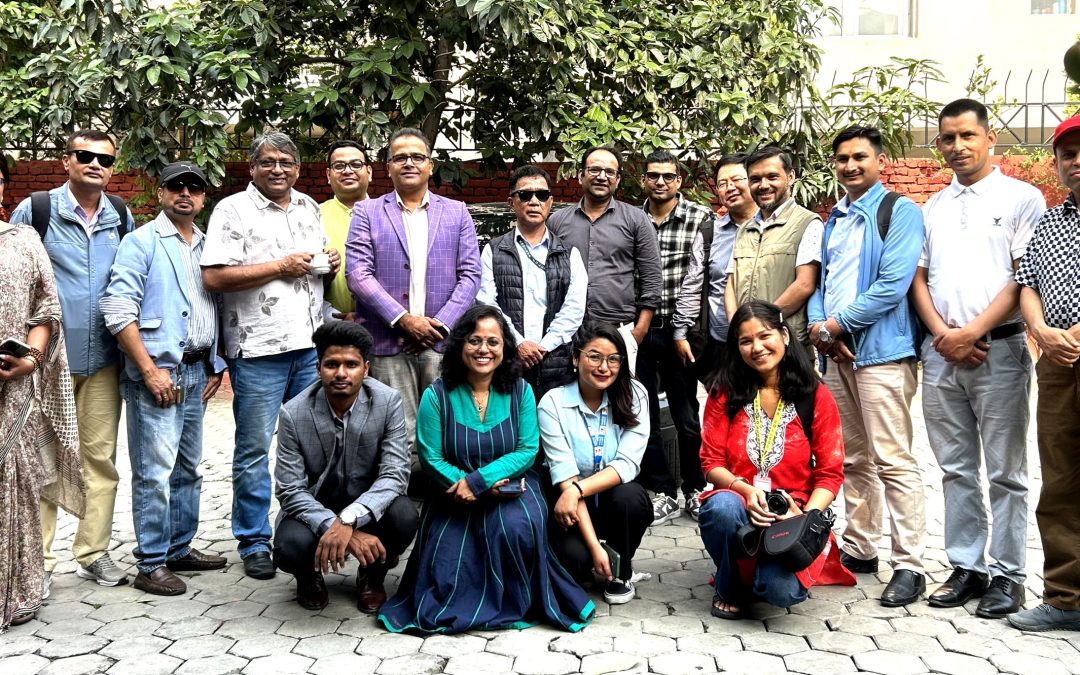
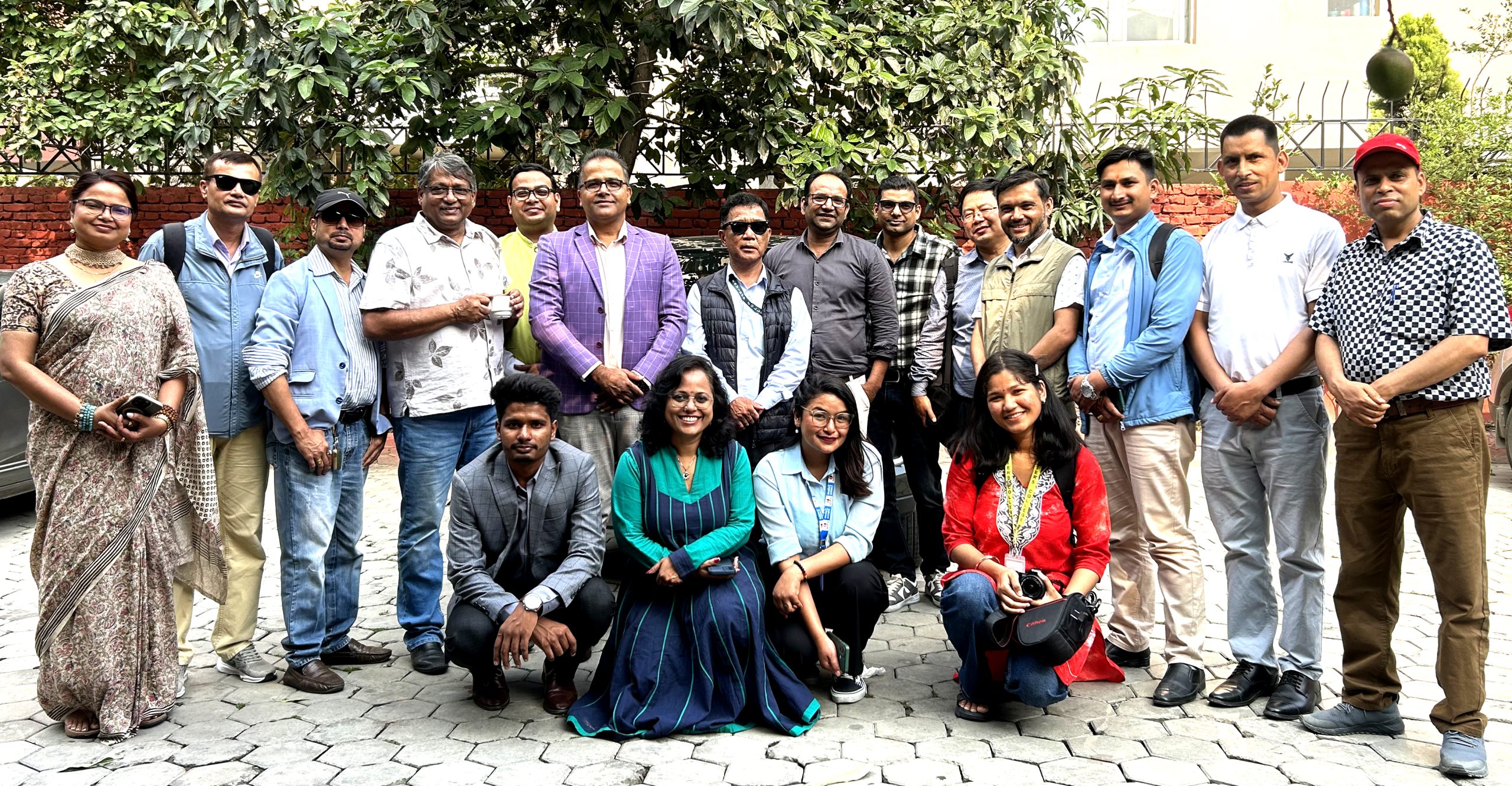
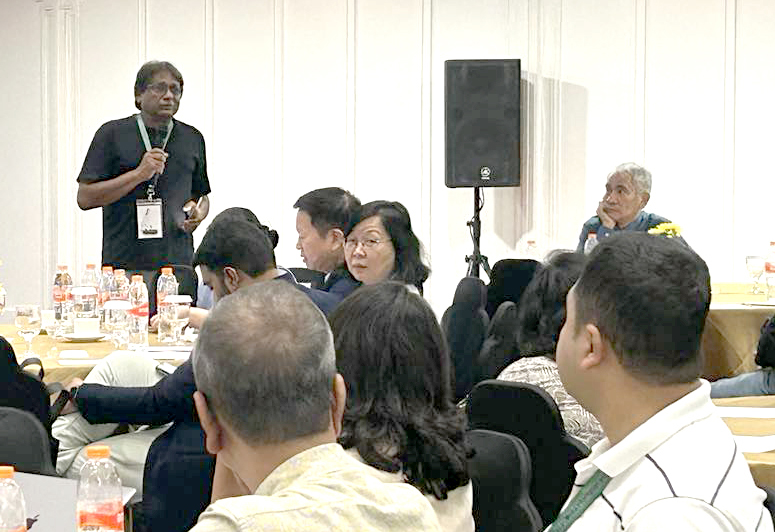
KATHMANDU/May 29: Asian Media Information and Communication Centre (AMIC) representatives from Nepal and India held a semi-formal discussion on Asia as a Knowledge Sharing Society in Kathmandu on 28th May 2024, aligning with AMIC’s 30th Annual Conference theme taking place in September 2024.

The discussion was witnessed by 29 participants from various institutions, including colleges, media houses, researchers, scholars, and academicians.

Laxman Datt Pant, AMIC’s representative in Nepal, presented an overview of AMIC and opportunities for research in communications and media. Pant stated that AMIC is an excellent platform for showcasing knowledge in various fields of media and research. “With proper use of AMIC, media researchers can contribute to and benefit the research field with a far-reaching impact.”

Similarly, Dr. Chandrabhanu Pattanayak, an AMIC representative in India and a well-known media academician, researcher, and journal editor, discussed Asia’s role in global knowledge and information exchange. According to Pattanayak, there is a reverse paradigm in Asia versus the West. “The West, on the one hand, emphasizes lingua franca, whereas the East or Asia emphasizes multilingualism, and, surprisingly, there have been no communication breaks or gaps between the countries,” he stated.

Dr. Aditya Shukla, an Indian academic, expressed his great pleasure at the opportunity to discuss such important issues. He said, “AMIC is doing tremendous work in the knowledge sharing field and establishing Asia as a knowledge hub. Particularly, the programme on Asia as a knowledge sharing society was well organised and programmes like such can explore the potential of Asia as a knowledge hub.”

He also stated, “If Asian countries come together and emphasize and share Asian knowledge on a high level. We can position our region as a knowledge hub. Because we are completely different from the West, and we have histories with various philosophies that have yet to be fully explored.” 

Shreeman Sharma, Research Uptake Manager at HERD International suggested that AMIC should help in enhancing the capacity of researchers and institutions in Nepal. This is an appropriate time to prioritize Nepal’s media and communication research needs, he added.  

Participants inquired about and expressed interest in AMIC’s work, as well as suggestions for how it can broaden its scope to help elevate the Asian perspective in Nepal through its rigorous work. They also discussed how Nepalese scholars can join the AMIC to contribute to and disseminate Asian knowledge throughout the world. The discussion was moderated by Bal Krisha Sah, a correspondent at the Himalayan Times English daily. (END)

AMIC Reaches Out

AMIC Reaches Out

AMIC Reaches Out to Other Asian Regions

One of the goals of the Asian Media Information and Communication Centre, Inc. (AMIC) for 2024 is to be Truly Asian. This means reaching out to all parts of Asia.

AMIC co-founder and current chairperson of the Board of Directors Dr. Crispin C. Maslog observed that since its creation in 1971, AMIC’s footprint has somehow focused on South and East Asia. For Dr. Maslog, it is time to reach out to communication professionals from other Asian regions including Oceania and the Pacific, Eastern Asia, Western Asia (mostly countries in the Middle East), Central Asia, and Northern Asia.

To achieve this vision, the AMIC Secretariat is seeking nominations for AMIC representatives. The following are the qualifications of an AMIC representative: (1) communication professional, i.e. educator, researcher, or practitioner (e.g., journalist, information officer, and PR practitioner); (2) with a wide network within the country to be represented; (3) recognized as one of the local leaders in the profession; and (4) willing to pursue the assignments as AMIC representative.

Among the duties and responsibilities of an AMIC representative are: 1) serve as the principal local contact on AMIC’s behalf in his/her country; (2) recruit individual and institutional AMIC members; (3) promote AMIC publications including journals (Asian Journal of Communication and Media Asia) and books; (4) recommend programs and projects that AMIC can pursue at the regional or national levels; (5) recommend and recruit participants to AMIC conferences and seminars;  (6) suggest topics and resource persons for AMIC-organized conferences, seminars/ workshops at the regional and national levels; (7) publicize AMIC activities widely in his/her country; (8) provide content for the AMIC website, newsletter, and social media accounts; and (9) identify and facilitate possible institutional hosts for AMIC annual conferences.

AMIC members and friends are invited to submit their nominations, along with their nominees’ curriculum vitae, to the AMIC Secretariat at info@amic.asia.

Introducing the Centre for Asian

Introducing the Centre for Asian

Introducing the Centre for Asian Studies in Africa

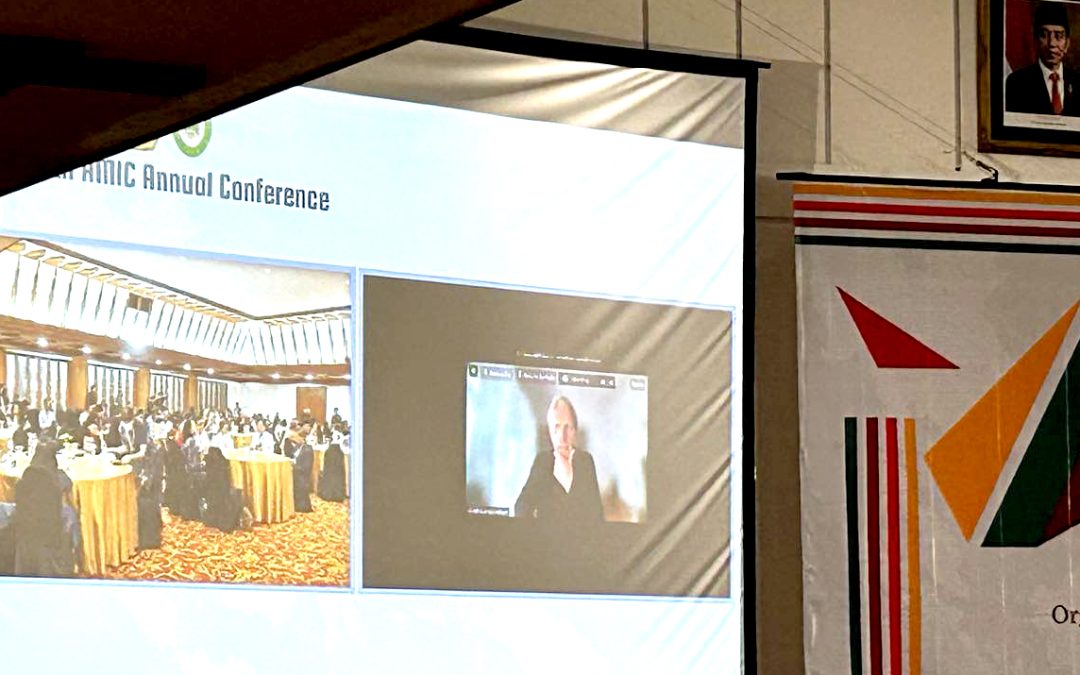
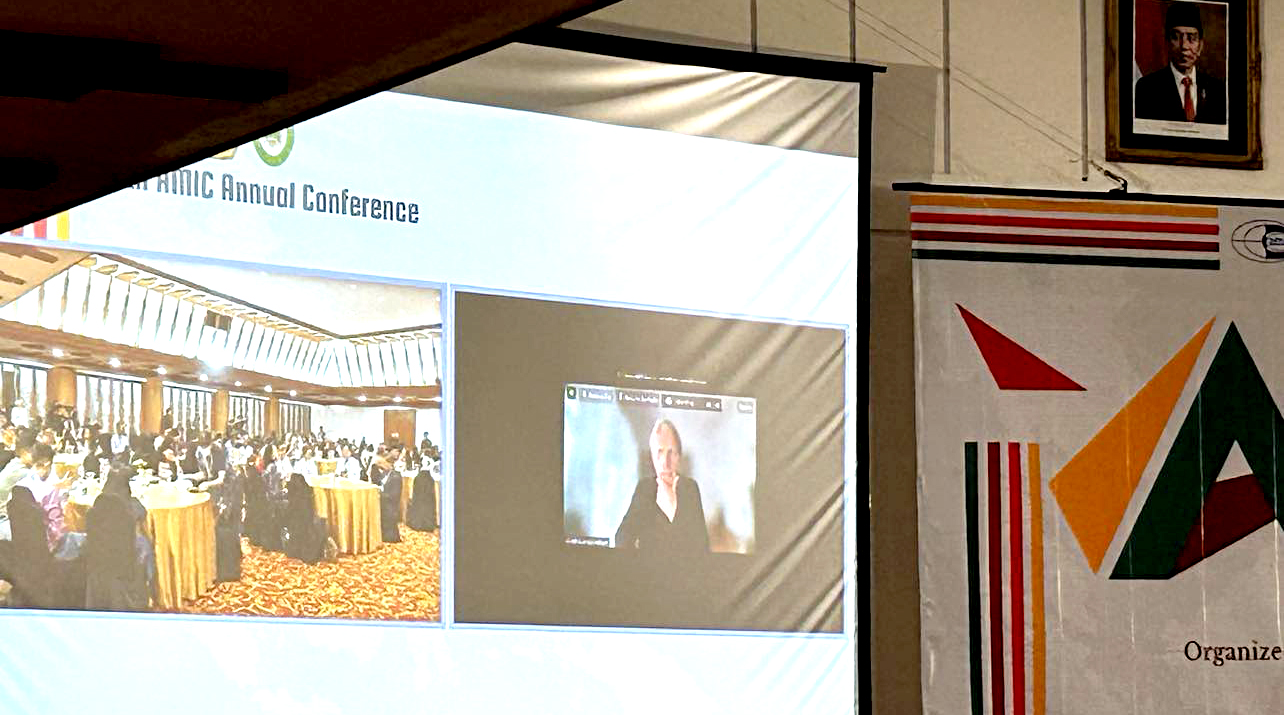
(Excerpts from online message of Prof. Alf Gunwald Nilsen, Director of CASA, University of Pretoria)

Our Centre aims to be a premier hub for knowledge production about Asia and Afro-Asian connections in South Africa and on the African continent. Our bedrock will be an ambitious array of innovative research initiatives that responds to Asia’s geopolitical significance in the twenty-first century, and to the concomitant need for critical expertise on the region from a distinctly African perspective. This bedrock will take its form from the deep and layered connections between the Asian and African continents – connections that are rooted in the past, which shape our present, and which most certainly will continue to animate our future in decisive ways. 

On this foundation, CASA aspires to contribute to teaching activities at the University of Pretoria and to be a resource to the worlds of government, business and work, to the arts and cultural and creative industries, and to civil society actors. We also intend to make the knowledge that we will produce a contribution to informed exchanges about Asian dynamics in South Africa’s public sphere. It goes without saying that this is needed in a context where Asia and Asian actors – both sovereign and private – are becoming an increasingly salient presence in the continent’s economic, political, and cultural life. 

At CASA, we are busy developing an intellectual agenda that reflects the imperatives of our times. These imperatives are defined by a conjuncture in which we witness the interlocking of consequential world-systemic transformations and equally consequential global challenges. 

What I mean by consequential world-systemic transformations is this – that over the past two decades, major countries in the global South have emerged as economic powerhouses and as geopolitical forces to be reckoned with, often establishing multilateral collaborations as a counterbalance to western dominance in world affairs. Asia, which from its western edge at the Bosphorus Strait to the Pacific Ocean is home to 60% of the world’s population and multiple emerging powers, and which constitutes the world’s largest continental economy, spearheads this process. When we consider in addition the remarkable global reach and influence of the continent’s cultural and creative industries, its art, and its literature, it is perhaps no wonder that the twenty-first century is also referred to as the Asian century. 

However, these transformations are deeply entangled in complex global challenges that demand keen attention and serious engagement. The world economy in which Asia has become such an important player is shot through with perverse inequalities. Just think, for instance, of the fact that 52% of global income and 76% of global wealth accrue to the richest 10% of the world’s population. Challenges are also manifest in the political realm, where an intensifying wave of autocratization has rolled back the global democratic advances made since the 1980s. And crucially, the impacts of climate change, which takes a disproportionate toll on countries and communities in the global South, and the very real possibility of climate disaster raise pressing questions about the prospects for sustainable planetary futures. 

CASA’s research agenda endeavours to take up the gauntlet that is thrown down by these interlocking transformations and challenges. We are fashioning spaces where global development challenges such as inequality and the future of work, democracy, governance and human rights, and sustainability and environmental justice can be explored – critically, independently, vigorously, and always with a keen eye with to how these development challenges are shaped by our multipolar world, a world in which Asia stands as a pivot of development dynamics. 

In doing so, we also focus closely on Asia’s role in and relationship to a changing global South. Here I want to highlight that it is not at all insignificant that CASA has been instituted at a point in time when the epistemic hegemony of the global North in academic knowledge production is increasingly being called into question and even challenged by open revolts. I highlight this because there is no denying that the field of Asian studies, as well as area studies more generally, have their roots in multiple unequal encounters – partly in the encounter between western colonial rulers and their subjects, partly in the encounter between the post-war geopolitical stratagems of the United States and the non-western world as a Cold War battleground, and partly in the encounter between a “developed” West and an “underdeveloped” Rest.  

CASA will make a concerted effort to contribute to the labour of disrupting, unsettling, and shifting prevailing ideas about the world beyond the West, and we will do this in no small part by committing ourselves to advancing epistemic justice in the study of Asia and Afro-Asian connections, as well as by making South-South collaborations a central pillar of our activities. Throughout – and in and through – our initiatives, we intend to explore what global area studies might look like when carried out from a Southern standpoint. I must admit to a certain epistemic uncertainty here: I don’t know what the end result will in fact look like, but I am convinced about the route that we must take to get there, and that is a route that proceeds via trans-regional dialogues – that is, dialogues between Asian and African scholars, dialogues between research-based knowledge fashioned in Asian and African contexts, and of course dialogues between Asian and African publics, engaging the challenges and questions that define our troubled conjuncture.  

Working at the intersection of consequential transformations and challenges and against epistemic asymmetries is daunting. However, I’m confident that this work can be done. The reason I say this is of course that Afro-Asian connections have proven themselves capable of sustaining some of the most daunting work witnessed in recent history. I’m thinking, of course, of how Afro-Asian solidarity both drove the work of overthrowing what Kwame Nkrumah referred to as the “bastions of colonialism” and underpinned the building of nations that would provide, in the words of Jawaharlal Nehru, “justice and fullness of life” to all their people. 

Now, I am not, of course, equating the building of a research centre with this movement of emancipatory world-making. I am, though, suggesting that we will do well in drawing some of our sustenance from this audacious insistence that progressive transformations are possible if our efforts are underpinned by a capacious solidarity. 

CASA, for one, will certainly do so as we go about the business of making knowledge from the global South for a changing world. 

I hope to cross paths with all of you along the way.