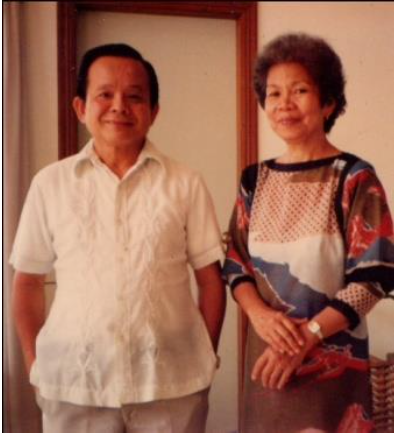
Tribute to Fr. Franz-Josef Eilers, Ph.D., SVD

Tribute to Fr. Franz-Josef Eilers, Ph.D., SVD

Tribute to Fr. Franz-Josef Eilers, SVD

(On her death January 13, 2021)

Media Asia Journal Accountability Report Header

The Asian Media Information and Communication Center, Inc.(AMIC) announces with sadness the death of AMIC laureate and long time AMIC Member, Fr. Franz-Josef Eilers, SVD. He was executive secretary of the Office of Social Communication of the Federation of Asian Bishops’ Conferences (FABC), and Consultor of the Pontifical Council for Social Communications in the Vatican.


Fr. Eilers passed away on 13 January in Manila, Philippines. The exact cause of his death is not yet publicly known but he had heart conditions for several years.


In 2018, AMIC awarded Fr. Eilers the 2018 AMIC Asia Communication Award for Transformative Leadership Award in recognition of his outstanding contributions to church and social communications, and in appreciation for the church communication institutions he has built. His excerpt of his award citation reads:


Over the years, the name Franz-Josef Eilers, SVD, has stood out in the field of Church and social communication. Many religious and lay leaders now engaged in the “communicating Church” were students and directees who got their knowledge and inspiration from their eminent teacher. 

An ordained priest of the Society of Divine Word (SVD) congregation, Fr. Eilers has written extensively on human and social communication, the concept first introduced in the Council Decree “Inter Mirifica” (1963). He ranks among a few Church scholars and theologians who has traced God’s communication in salvation history. He also explicated  the new concepts pastoral communication and evangelizing communication in one of his most seminal works.  His priestly ministry, now spanning five decades, saw his books used as standard references in missiology, intercultural communication, and communication. His name resonates as one of a few significant contributors in literature and discourses on communication theology.

The Asian Media Information and Communication Centre (AMIC) 2018 Asia Communication Award recognizes Franz-Josef Eilers, SVD, for his contribution to Church and social communication.

Fr. Eilers is professor at the Pontifical University of Santo Tomas (UST), Maryhill School of Theology (MST), and Don Bosco Center of Studies (DBCS) in Manila. He is the founder/coordinator of a graduate program in Theology specializing in social/ pastoral communication (MAT-SPC) at UST. He holds a Doctorate in Communication and a Licentiate in Missiology from the University of Muenster in Germany. He is adjunct professor of the University of the Philippines at Los Banos (UPLB) College of Development Communication. He has taught Communication and Missiology at Divine Word Seminary in Tagaytay City, as well as the Gregorian and Salesian Universities in Rome.

Fr. Eilers helped establish the Asian Research Center for Religion and Social Communication (ARC) at Saint John’s University, Bangkok, Thailand. He also co-founded St. Joseph Freinademetz Communication Center (JFCC) in Quezon City, Philippines.

Fr. Eilers has served as executive secretary of the Office of Social Communication of the Federation of Asian Bishops’ Conferences (FABC), and Consultor of the Pontifical Council for Social Communications in the Vatican. He served as communication secretary of the SVD Generalate in Rome, and at the Joint Committee on Society Development and Peace (Sodepax) of the World Council of Churches in Geneva. He was founding director of the Catholic Media Council (CAMECO) in Aachen, Germany.

He was conferred the Jaime Cardinal Sin Outstanding Catholic Author Award in 1996. The Carmelite Fathers (OCarm) conferred on him in 2015 the very first Titus Brandsma Excellence in Social Communication Award for his contribution to communication education, formation and research. In 2007, a “Festschrift” was published in his honor by colleagues from University of Dayton in Ohio, U.S.A. and University of Kassel in Germany.


AMIC conveys its deepest sympathy to his colleagues, friends, and the SVD community.
Media Asia Journal Accountability Report (January-December 2020)

Media Asia Journal Accountability Report (January-December 2020)

Media Asia Journal Accountability Report Header

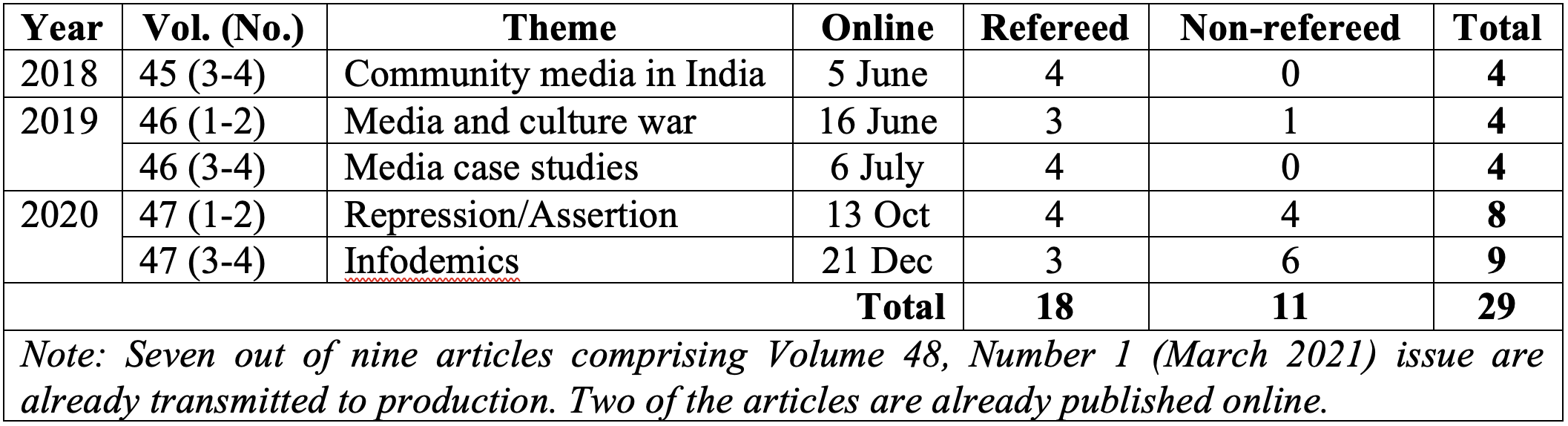
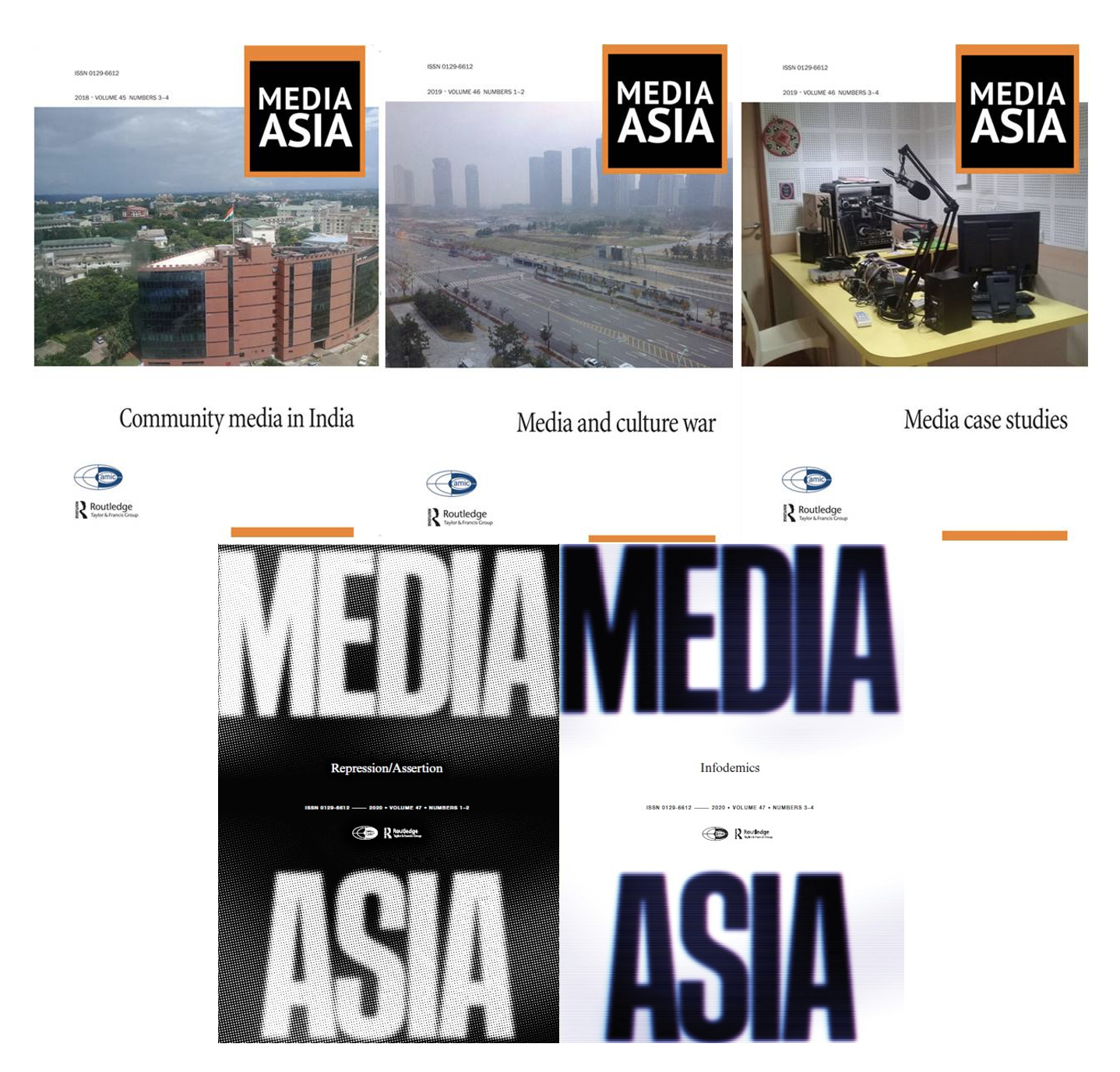
Issues published in 2020

Issues Published in 2020

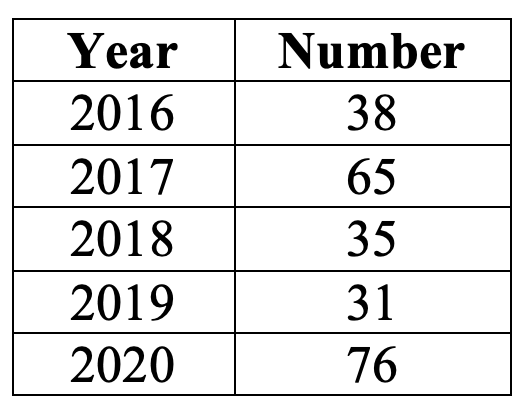
Comparative data of manuscripts received from 2016 to 2020
(refereed articles only)

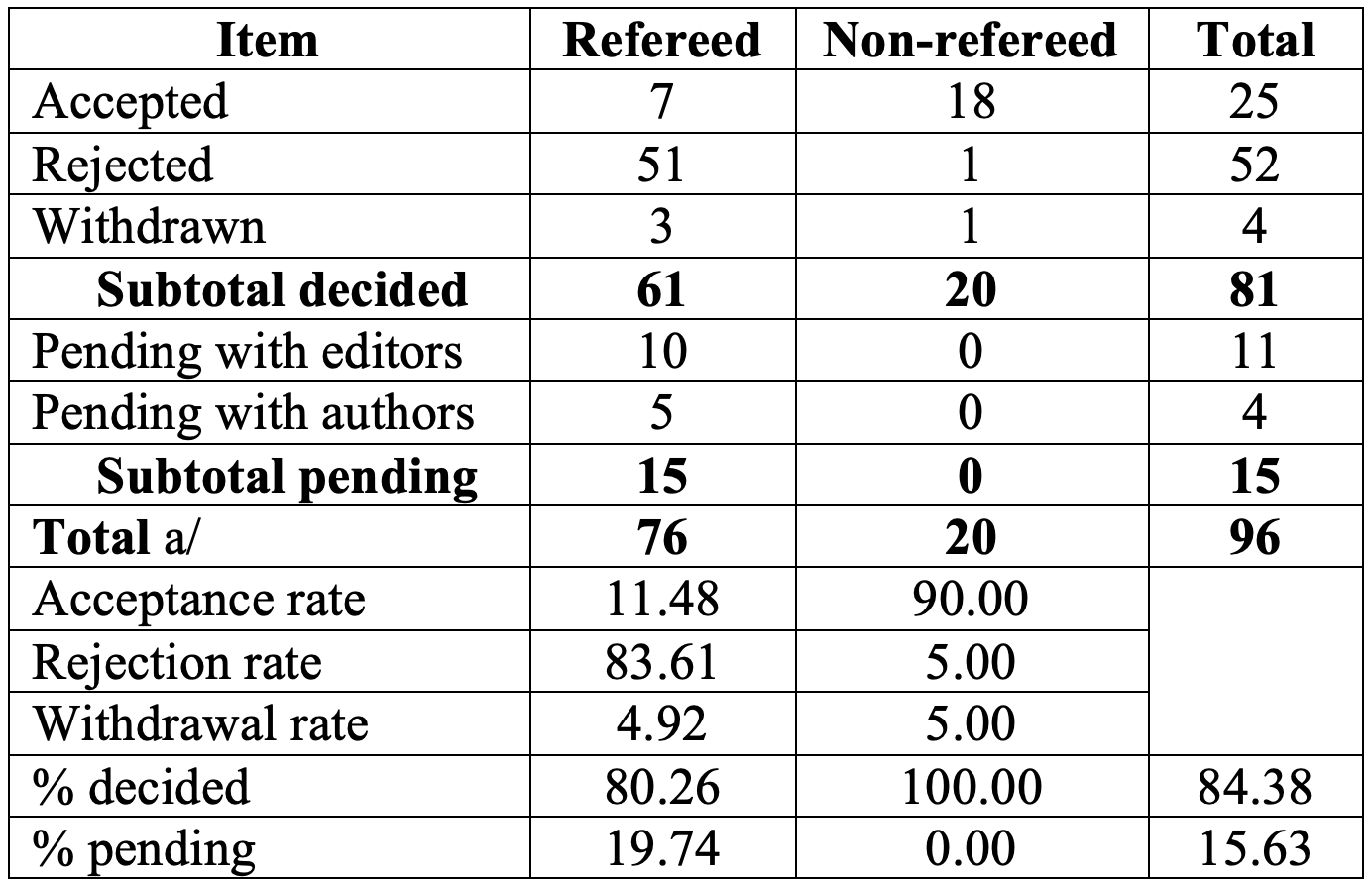
Status of refereed and non-refereed manuscripts submitted in 2020

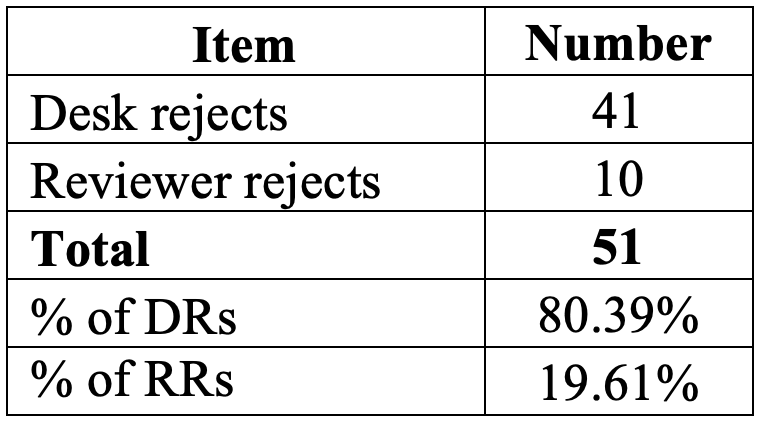
Rejection data breakdown – refereed articles only

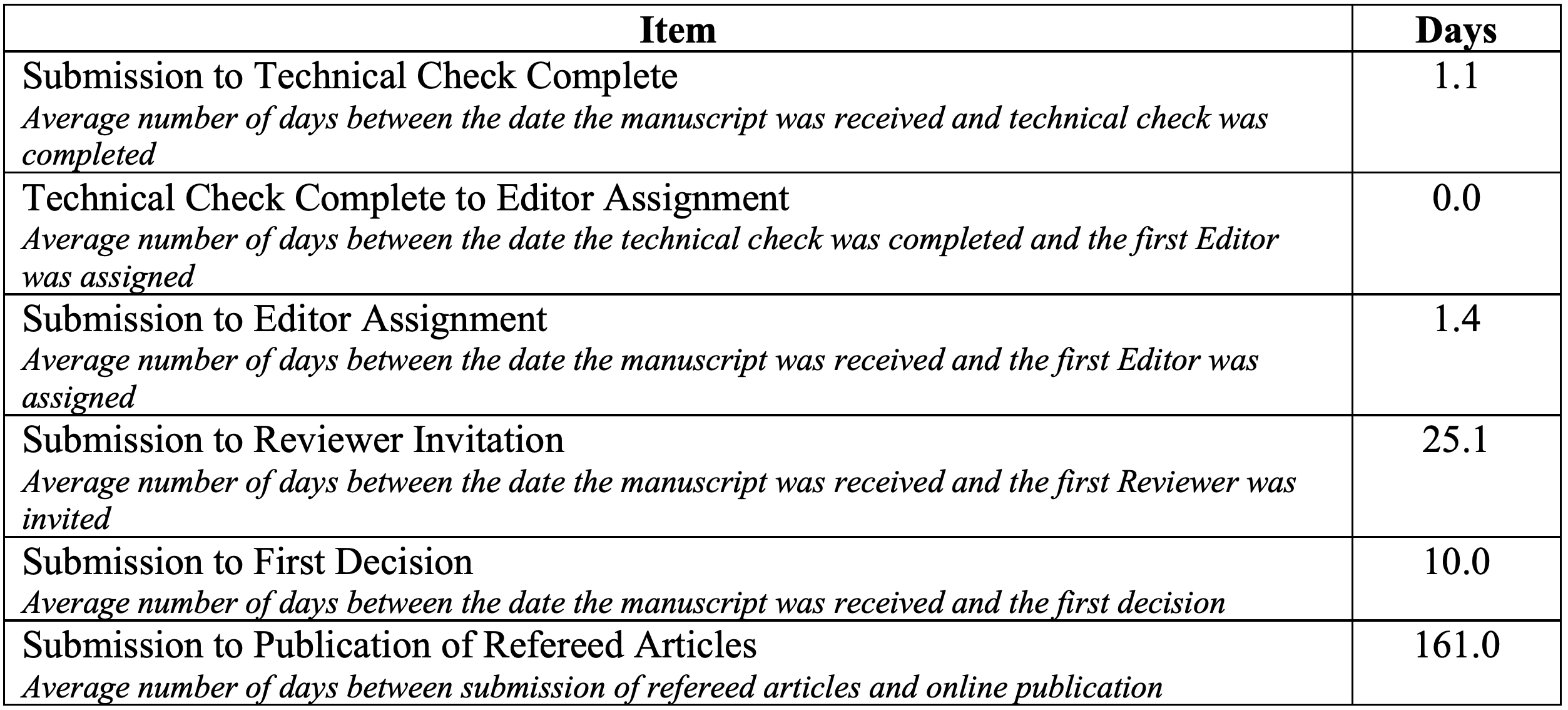
Turnaround time

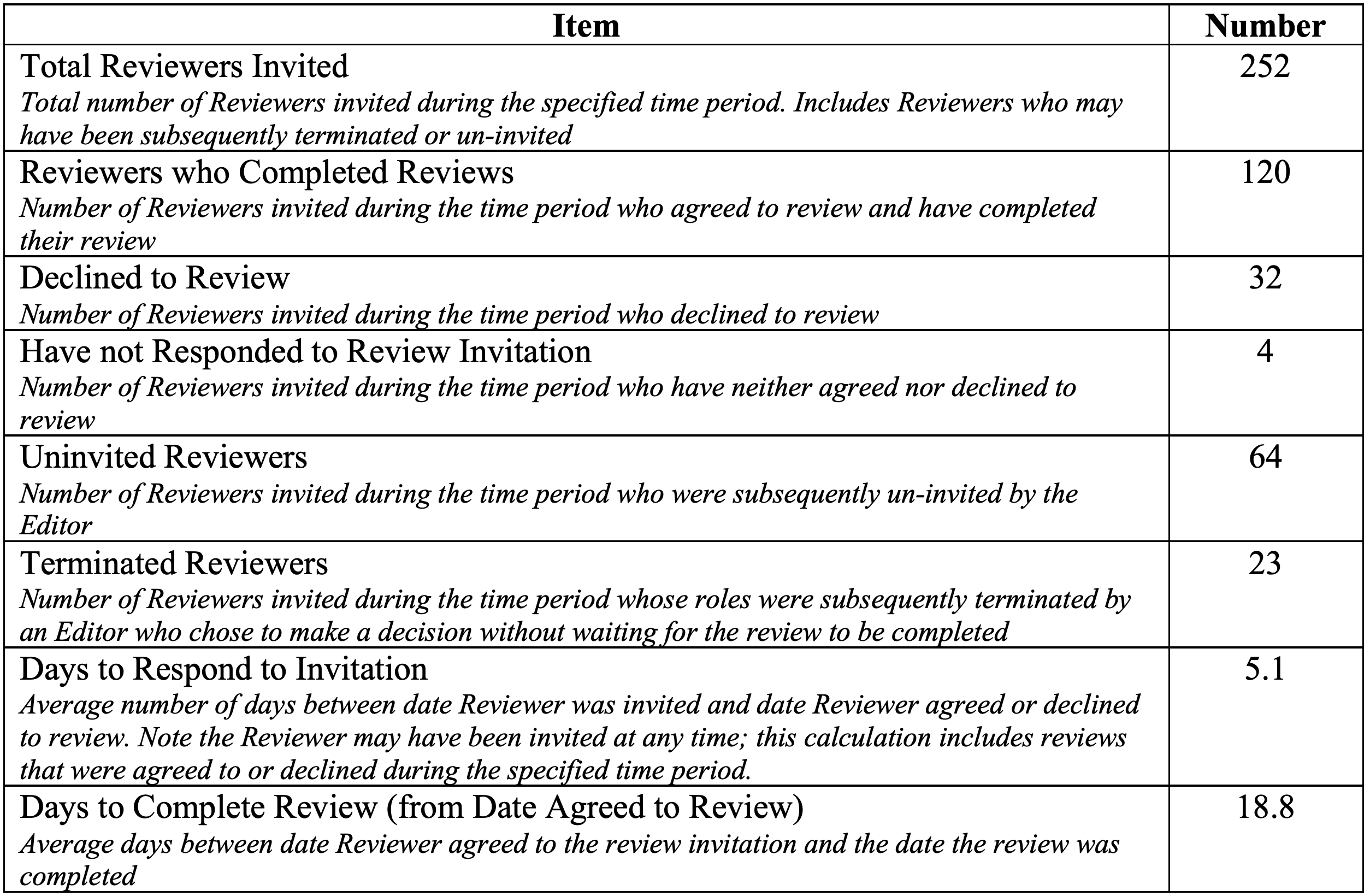
Reviewer statistics

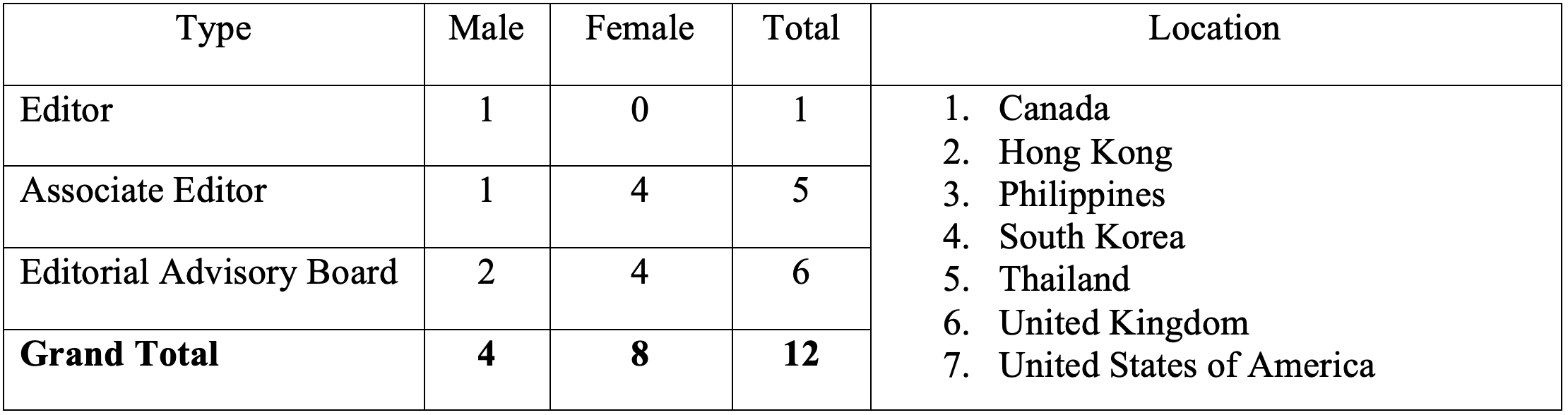
EDITORIAL BOARD COMPOSITION

MAJOR ACHIEVEMENTS IN 2021

  1. Reconstituted editorial board consisting of five associate editors and one editor at the start of the year
  2. Arrested the backlog of pending manuscripts (i.e., the manuscripts pending with editors numbered 91 before the reconstitution of the new editorial board)
  3. Published the backlog of issues in 2018 and 2019 (three joint issues)
  4. Published the issues in 2020 (two joint issues)
  5. Implemented faster turnaround time in handling manuscripts and in replying to authors’ queries
  6. Indexed in Scopus (i.e., application was approved on 8 August 2020)

OTHER ACTIVITIES

  1. Issued two calls for papers1. Issued two calls for papers
         a. Regular call for papers (5 February 2020)
         b. Special call for papers on media and the pandemic (19 May 2020)
  2. Redesigned cover starting with the 2020 issues
  3. Expanded editorial board to include an Editorial Advisory Board
  4. Revised correspondence templates to ensure more accurate messaging
  5. Updated T & F’s Media Asia website to ensure more accurate information, especially when it comes to journal indexing and abstracting
  6. Created @MediaAsiaJourn Twitter account (5 November 2020)

PLANS FOR 2021

  1. Ensure publication of four issues (March, June, September, December)
  2. Sustain fast turnaround time

Marikina City, Philippines
2 January 2021

Download Media Asia’s Repression/Assertion issue now

Download Media Asia’s Repression/Assertion issue now

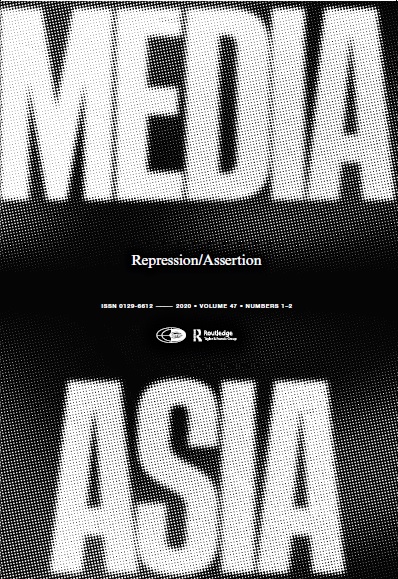
Media Asia 47 (1-2) cover

Download Media Asia’s Repression/Assertion issue now


“Repression/Assertion” is available for a limited time.

From now until December 31, 2020, all contents of Media Asia’s Volume 47, Numbers 1-2 may be read and downloaded for free (https://www.tandfonline.com/toc/rmea20/47/1-2?nav=tocList).

Media Asia is a quarterly peer reviewed journal published by the Asian Media Information and Communication Centre (AMIC) and Routledge Taylor & Francis Group.

The “Repression/Assertion issue consists of one editorial, four refereed articles and three commentaries.

Editorial: Realities of repression, intricacies of assertion
By D. A. Arao, L. Brooten, P. Custodio, R. Du, M. T. M. Rivera, and N. Y. Zhang
https://www.tandfonline.com/doi/full/10.1080/01296612.2020.1829364

The danger of words: major challenges facing Myanmar journalists on reporting the Rohingya conflict
By N. Lynn
https://www.tandfonline.com/doi/full/10.1080/01296612.2020.1824569

Work-related sexual harassment and coping techniques: the case of Indonesian female journalists
By D. N. Simorangkir
https://www.tandfonline.com/doi/full/10.1080/01296612.2020.1812175

Social media and disinformation in war propaganda: how Afghan government and the Taliban use Twitter
By H. M. Bahar
https://www.tandfonline.com/doi/full/10.1080/01296612.2020.1822634

How do leading companies in Greater China communicate CSR through corporate websites? A comparative study of mainland China, Hong Kong and Taiwan
By M. Zhao
https://www.tandfonline.com/doi/full/10.1080/01296612.2020.1822635

Commentary: COVID-19 and social-politics of medical misinformation on social media in Pakistan
By M. Ittefaq, S. A. Hussain, and M. Fatima
https://www.tandfonline.com/doi/full/10.1080/01296612.2020.1817264

Commentary: Muzzling the media: the perils of the critical press in the Philippines
By B. Puente
https://www.tandfonline.com/doi/full/10.1080/01296612.2020.1818172

Commentary: Growth of a young journalist amid the pandemic and media repression
By Sammy Westfall
https://www.tandfonline.com/doi/full/10.1080/01296612.2020.1824342

Danilo Araña Arao (University of the Philippines Diliman) is the editor of Media Asia. The associate editors are Lisa Brooten (Southern Illinois University Carbondale), Pamela Custodio (University of the Philippines Los Baños), Roselyn Du (California State University Fullerton), Ma. Theresa M. Rivera (Far Eastern University Manila) and Nick Y. Zhang (Hong Kong Baptist University).


(end)


Tribute to Nora C. Quebral

Tribute to Nora C. Quebral

Tribute to Nora C. Quebral

(On her death Oct. 24, 2020)
By Crispin C. Maslog

Media Asia Journal Accountability Report Header

The first time I met Nora was in the early 1970s, shortly after I became director of the School of Journalism and Communication in Silliman University. Those were the days when we both were young and gay, and the word gay meant happy and not what it means today. Fifty years later, I pay tribute to my esteemed friend and scholar who has passed away to eternal pastures.

She was then a young faculty member of the Institute of Development Communication, UP Los Banos. And I was a new associate professor of communication in Silliman. She struck me as intellectual, demure and soft spoken. We kept in touch over the years, growing our professions in our respective parts of the country. We had a common advocacyrural development. I nurtured community journalists for the small towns. She developed communicators for the countryside. We struck up a quiet professional friendship, partly because of our common advocacy.

It was in 1975 that we started working together as founding organizers of our professional organizationthe Philippine Association of Communication Educators (PACE). She became the second President of PACE from 1980 to 1984. I took over as third President from 1985 to 1989.

By that time I was already a professor at the College of Development Communication, which had grown from the Institute when I first met Nora. Nora had a major influence in my coming to UP Los Banos in 1982. I came as a visiting professor but my visit became permanent with her encouragement–and the rest is history.

I stayed and saw Nora develop her practice and theory of development communication and her rise in stature to become the “mother of development communication” to hundreds, perhaps thousands of former students, scholars and professionals all over the Philippines and the world.

It has been a privilege to have stayed on and retire from UP Los Banos with my wife, Florita, who was just as happy as I was with my decision because her childhood home is in Santa Cruz, Laguna. So to my esteemed friend and development communication comrade in arms, Nora, thank you for accepting me here in UP Los Banos. I leave with you the words of the Indian poet Rabindranath Tagore:

“Death is not extinguishing the light. It is only putting out the lamp because the dawn has come.”

###

[Call for Book Chapter Abstracts] Environmental Journalism in the Global South

Dear AMIC Members:

We–Ramon Tuazon, Sadia Jamil and Therese San Diego Torres–are pleased to open the call for book chapter abstracts for our forthcoming publication, “Environmental Journalism in the Global South.” We invite you to submit your abstracts.

Below are the details. We have also attached the PDF of the call here.


Call for abstracts

Environmental issues continue to grow in scope, indicating the timely need to address pressing areas of concern: global warming; climate change; food security and public health safety; overpopulation; water, land, and air pollution; increased carbon footprint; deforestation; and natural disasters. These issues go beyond the realm of science into the areas of politics, public policy, and economics. As environmental concerns grow, the need for a well-informed public becomes more critical (Jamil, 2020). Public opinion and perceptions about environmental issues are shaped by many sources including government and non-government organizations, the academe, and the media. Journalists and the news media, in particular, are among the important sources of information about the environment. A major challenge is how to convey complex concepts and impart a sense of urgency in addressing problems in a way that engages the reader. In the past two decades, environmental journalism has evolved to serve this purpose and has represented people’s diverse perceptions of the world. Over time, people have become more and more interested and concerned about what is happening in the environment. As more information comes to light about how environmental issues impact people and the globe, the interest in and recognition of the importance of environmental journalism have likewise increased. The rise in public awareness has translated to an even greater need for environmental journalism studies. Much of the work on environmental journalism has been done by Western scholars (Sachsman and Valenti, 2020; Valenti, 2017; Rogener and Wormer, 2017; Ale, 2015; Bodker and Neverla, 2014; Bodker, 2012; Carthew et al., 2012; Wyss, 2010; Frome, 1998), and limited attention has been paid in the Global South to reflect upon different aspects of environmental journalism (Acharya and Noronha, 2010). Thus, this edited volume welcomes contributions from scholars in the Global South to cover the following key areas:

– Journalists’ attitudes and motivations towards environmental journalism;
– The influence of contextual factors, such as religious, cultural, ethnic and socio-political environments, on journalists’ practice of environmental journalism;
– Coverage of environmental issues by mainstream, ethnic and diasporic news media;
– The role of religious, political and cultural factors in shaping and influencing news media discourses on diverse environmental issues;
– Challenges and prospects for the practice of environmental journalism;
– The role of economic, intellectual and technological resources to foster environmental journalism;
– Environmental journalism pedagogy in the Global South.

Submission details and guidelines:

Please submit your abstract of 500-700 words by 20th November, 2020. All abstracts will be assessed based on:

– Clarity of research problem;
– Conceptual soundness of study;
– Theoretical and methodological strength;
– Contribution and impact of the study.

Abstracts should be submitted to Dr. Sadia Jamil (sadia.jamil@ymail.com), Ramon Tuazon (ramon.tuazon@aijci.com) and Therese Patricia S. Torres (therese.torres@aijci.com). All authors should submit a bio of 200 words with complete institutional details when submitting their abstracts.

Timeline

– Abstract submission deadline: 20th November, 2020
– Notification to author/s: 10th December, 2020
– Full chapter submission: 15th April, 2021
– Review process by editors: 16th April, 2021 – 15th May, 2021
– Revision deadline: 1st July, 2021
– Anticipated submission of full book manuscript: 30th September, 2021

Publisher

The full book will be submitted to Palgrave Macmillan in 2021 and is envisioned to be published as part of the ‘Palgrave Studies in Journalism and the Global South’ book series: https://www.palgrave.com/gp/series/16423 (series editors: Bruce Mutsvairo, Saba Bebawi and Eddy Borges-Rey).

On behalf of Sadia Jamil and Therese San Diego Torres, I look forward to hearing from you. 

Best regards,
Ramon R. Tuazon