New country reps named

New country reps named

New country reps named

The following are the newly appointed AMIC country representatives:

Christine Faith M. Avila
AMIC Country Representative for Philippines (Mindanao)

Dr. Christine Faith M. Avila is associate professor, Communication Program, Ateneo de Davao University. She graduated with a doctorate degree in Communication at the University of the Philippines Open University. A marketing communications practitioner, she has experience in managing external communications, such as advertising and public relations works for banking and hospitalities.

As a former practitioner and now educator, she has been handling professional subjects related to her profession such as Communication Theory, Integrated Marketing Communication, Knowledge Management, Virtual Communication and Communication Internship. She is also an active communication researcher presenting papers at local and international conferences.

She is one of the pioneering members and former president of the Media Educators of Mindanao from 2019 to 2021. She worked with the Commission of Higher Education as part of the Regional Quality Assessor Team (RQAT), checking and monitoring the educational standards of various curricula for their communication programs.

She served as the Public Information Officer and the Communication Discipline representative in the Council of Educators of Deans for Arts and Sciences (CEDAS) in Region XI from 2020 to 2022. Currently, she is the country representative for Mindanao at the Asian Media Communication Center (AMIC). More than an educator, she is a loving wife, a hands-on mom to two girls, and a life coach handling a network of women for 15 years and counting.

Dr. Earvin Charles Cabalquinto
AMIC Country Representative for Australia

Lecturer in Communication, School of Communication and Creative Arts (SCCA), Faculty of Arts and Education Member, Alfred Deakin Institute for Citizenship and Globalisation Honorary Visiting Fellow, Humanities Research Centre, Australian National University Research Affiliate, Centre of Excellence in Research on Ageing and Care (CoE AgeCare), University of Jyväskylä, Finland Social Media Editor, Asian Journal of Communication Editorial Board Member, International Journal of Cultural Studies.

Recent publications:

Between existential mobility and intimacy 5.0: Translocal care in pandemic times“, Media, Culture & Society Without technology we’d be very stuck”: Ageing migrants’ differential (im)mobile practices during a lockdown, Media International Australia.

“Come on, put Viber, we can drink coffee together.”: Performing (im)mobile intimacy in turbulent times among aging migrants, Communication, Culture & Critique

Care within or out of reach: Fantasies of care and connectivity in the time of the COVID-19 pandemic, Viral Loads: Anthropologies of urgency in the time of COVID-19.Migrant platformed subjectivity: Rethinking the mediation of transnational affective economies via digital connectivity servicesInternational Journal of Cultural Studies.

For a full list of publications, visit my Academic website

Connect with me via Twitter

Deakin University
221 Burwood Hwy, Burwood VIC 3125
Phone: +61 3 924 46861
earvin.cabalquinto@deakin.edu.au
Deakin University CRICOS Provider

Code 001138

Pushpa Chhetri
AMIC Country Representative for Bhutan

Pushpa Chhetri is a social entrepreneur. She is a mother of two. She worked in Kuensel, the first and the only newspaper and now the only daily for 15 years.

She founded Bhutan Media and Communications Institute in 2011, the first private institute of its kind in Bhutan to contribute towards a professional development of Media and Communications Industry.

She was awarded Loden’s best Entrepreneur Award in 2016. She measures success in terms of social service and impact rather than financial returns.

Today, BMCI provides short trainings and consultancy services. It is also International Certification of Digital Literacy (ICDL) Asia’s local partner in Bhutan. ICDL is world’s leading computer certification program.

She believes that women can play a significant role in the economic development of the country through social entrepreneurship.

She is also a Member of the Journalists’ Association of Bhutan, Bhutan Association of Entrepreneurs and Bhutan Association of Women Entrepreneurs (BAOWE).

Mr. Laxman Datt Pant
AMIC Country Representative for Nepal

The Recipient of the “International Communication Excellence Award-2020,” Mr. Laxman Datt Pant serves as the Chairperson of Media Action Nepal.  In February, 2022, Pant was elected as one of the three Co-Chairs of the Media Freedom Coalition-Consultative Network (MFC-CN). An Adjunct Professor of Media Ethics at the Tbilisi State University in Georgia, he taught development journalism at the University of Dhaka in Bangladesh (2008-2009) and various courses of media studies at  Kathmandu University in Nepal (2010-2018). In addition to delivering guest lectures in the reputed Universities across the world, Pant worked as the Coordinator for Future Communicators’ Project, implemented by the School of Journalism of the Yunnan University, China (2019-2021).

A former UN Programme Specialist, Pant started his career as a journalist more than two decades ago and worked with numerous media institutions in different capacities ranging from a reporter to an editor.  Co-editor of the UNESCO research publication Supporting Safety of Journalists in Nepal: An Assessment Based on UNESCO‘s Safety Indicators- A Media Safety Landscape of Nepal (2016) , co-editor/lead researcher of the UNESCO/PMA study on Impact of COVID-19 on media freedom, journalist safety and media viability in Southeast Asia (2021), Pant also served as the Member of the Advisory Editorial Board/Author, IGI Global, USA for books titled “Combating Threats to Media Freedom and Journalist Safety (2020)” and “Discrimination, Gender Equality and Safety Risks in Journalism (2021)” .

A PhD Scholar in Media Ethics & Professionalism at the Infrastructure University, Malaysia, Pant holds extensive knowledge of the local, regional and international media environment.

Dr. Sadia Jamil
AMIC Country Representative for
United Arab Emirates and China

Dr. Sadia Jamil is an Assistant Professor at the School of International Communications, The University of Nottingham, Ningbo, China. She earned a PhD in Journalism (University of Queensland, Australia), a Master of Science in Media Management (University of Stirling, Scotland), and a M.A. in Mass Communication (University of Karachi). She has taught courses at the Khalifa University of Science and Technology, Abu Dhabi and in the past, at the University of Queensland, Australia.

Dr. Jamil is the Chair of the Journalism Research and Education Section of the International Association of Media & Communication Research (IAMCR). She is also the co-editor of IAMCR and Palgrave book series, the ‘Global Transformations in Media and Communication Book Series’. 

Dr. Jamil is one of the Ambassadors of Digital Poverty Alliance (DPA). She sits in the editorial boards of five leading international journals in the areas of journalism, digital media, political communication, and media practices in the Middle East. She is serving as honorary advisor of Media Action Nepal as well.

Rowena Capulong Reyes
AMIC Country Representative for Philippines

Rowena Capulong Reyes, PhD,  is Dean of the Institute of Arts and Sciences of Far Eastern University (FEU). Dr. Reyes holds the rank of professor at FEU, handling select communication and education courses on integrated marketing communication, community relations and social advocacy. Her scholarly work has covered spatial governance, associational life, social media, and marketing communication.

Prior to being appointed Dean, Reyes was FEU’s Manager of Marketing and Communication from 2014 until May 2019.

Reyes was recently appointed as Asian Media Information and Communication Center (AMIC) Philippines country representative for Luzon and executive committee member  of Asia Pacific Communication Alliance (APCA). She is the Ex-Officio and  immediate past  president of the Philippine Association of Communication Educators (PACE). She previously held the same position at the Public Relations Educators Association of the Philippines (PREAP) and was the former Dean of the College of Liberal Arts and Sciences of Colegio de San Juan de Letran, where she served as the founding director of the Institute of Communication.

Outside of academia, Reyes is a member of the Metro Manila Film Festival (MMFF) Executive

Committee and is designated Chair of the MMFF’s Education Committee. An accredited Public Relations counselor, Reyes is also a partner and managing director of 5 BC Integrated Marketing Communication.

Reyes holds a Ph.D. in Development Studies and a BA in Communication Arts from the University of Santo Tomas. She is also an alumna of the Asian Institute of Journalism and Communication, holding an MA in Communication Management.
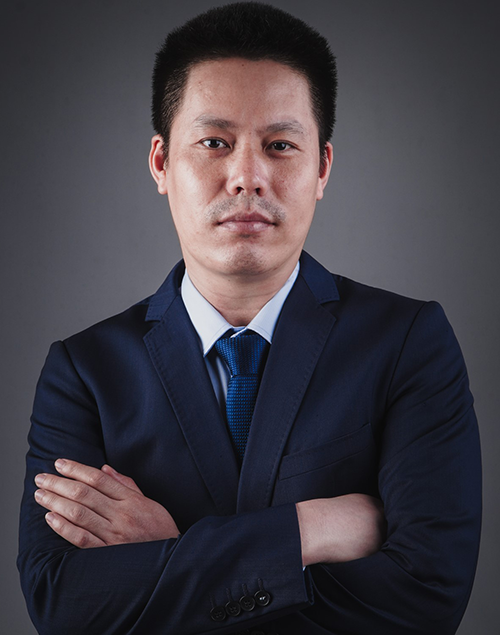
Dr. Vu Thanh Van
AMIC Country Representative for Vietnam

Senior lecturer and director of International Cooperation Department at the Academy of Journalism and Communication (AJC), Vietnam. Former management positions include secretary of AJC Council, deputy dean of International Relations Faculty and deputy director of Research Department at AJC.

His specialization is in journalism and political science. In 2020, he contributed a paper entitled “The New Media Landscape and Challenge for Policy Communication in Vietnam” to the 13th volume of Comparative Studies of Public Administration XIII (Local governance in the age of technological transformation and global uncertainty.)

In 2021, he published the manuscript “Public Trust in Government and Compliance with Policy during COVID-19 Pandemic: Empirical Evidence from Vietnam” in Public Organization Review and “The COVID-19 Pandemic and Human Rights Limitation: The Role of Trust and Communication in Vietnam, in Asian Review. Vol 34 (2).

In 2022, he co-published “Gratitude“ in Journal of Marketing Theory and Practice.

He published a book entitled International Communications and co-wrote a book entitled Theory and Practice of Policy Communication. He also edited some publications, i.e. Policy communication: Vietnam and Korea’s experiences (2017), Public Policy communication and social consensus (2018), Policy communication and public reception literacy (2019); Managing Information on Social Media in the Context of Information Explosion (2021); and Technology for Policy Communication in 4.0 Era (2022), among others.

He was Fulbright scholar to University of South Carolina (2007) for the study of US institutes; exchange lecturer to Stockholm University (2012); visiting lecturer to Hamburg University (2015) and Vienna University (2018). He was trained in public administration and new public management at Civil Services College and Management Development Institute of Singapore, and in journalism at the Academy of Journalism and Communication (Vietnam).

E-mail: vanvuajc@gmail.com
AMIC Co-Organizes 3rd Mobile Studies Congress

AMIC oo-organizes 3rd Mobile Studies Congress

The 3rd Mobile Studies Congress was held on 09-11 December 2022 with the theme, “Go Mobile, Stay Innovative.” The in-person sessions were held at the School of International Communications, the University of Nottingham Ningbo China. Many other participants also attended online sessions. The Congress gathered over 150 participants from all over the world.

The Congress was organized by Institute of Mobile Studies (IMS), International and Mobile Innovation Network and Association (MINA). The co-organizers were University of Nottingham China, Zhejiang University, Swinburne University of Technology (Australia), and Asian Media Information and Communication Centre (AMIC).

The first Mobile Studies Congress with the theme, “Go Mobile, Stay Healthy,” was held on 13-15 November 2020 which was followed by the second Mobile Studies Congress with the theme, “Go Mobile, Stay Sustainable,” on 12-14 November 2021.

The congress is one of the annual events of IMS. The other event is Mobile Studies Summer School.

Since its inception in October 2019, IMS has been at the forefront in promoting and conducting mobile studies as an emerging field of scientific research. Areas of study include mobile media, mobilities, and mobile communications.

IMS has obtained its national and international reputation as the leader in mobile studies in higher education in China and one of the leaders in higher education globally.

This year’s congress had two pre-congress workshops: Workshop 1: DiVoMiner for Innovative Mobile Studies,” with Dr. Angus Cheong and Lawrence Dang as resource persons. This was held on 03 December 2022. Workshop 2 was “Micro-Documentary” (in Chinese) held on 4 December 2022 with Ms. Lei Chen as resource person. A Pre-Congress Partner Session consisting of four panel sessions was held on 08 December 2022.

The three-day congress consisted of four partner sessions inclusive of 21 panel sessions featuring diverse subjects such as digital divide and digital equity, mobile communication literacy, mobile health, mobile education/learning, intelligent communication, mobile creativity, mobile and smartphone filmmaking.

Day 03 also featured two Smartphone Film Forums. Two post-conference workshops were held on 17 December and 18 December with the themes, “Mobile Documentary Workshop” and “Mobile City Storytelling Workshop,respectively.

In his welcome speech, Founding Chair of Mobile Studies Congress Dr. Xiaoge Xu emphasized Mobile Studies Congress as a global annual event, aiming to promote mobile studies as an emerging field of research and to share experience and expertise in leveraging mobile for enhancing mobile communications.

Dr. Xu Xiaoge is also the Founding Director of Institute for Mobile Studies, School of International Communications and founder of the Mobile Studies International.

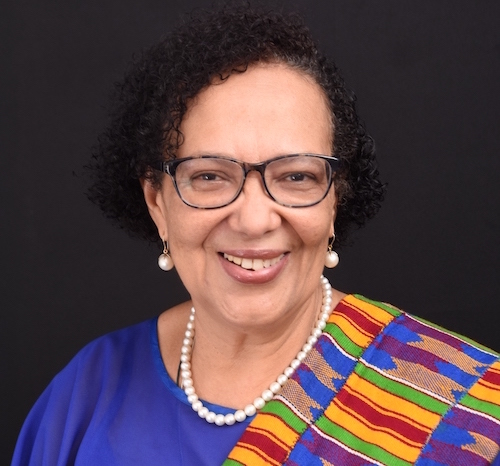
Dr. Sadia Jamil, Assistant Professor and Co-Director of the University of Nottingham Institute for Mobile Studies, and AMIC Country Representative for the United Arab Emirates and China, chaired the opening session and Keynote Session 1.  She also chaired the closing session of the Mobile Studies Congress.

According to Dr. Jamil, mobile phone technology is not just transforming individual’s routine life but also reshaping business practices and operational strategies in many sectors. She acknowledged the transformations brought by mobile phone technology and the need to broaden the research within this area, incorporating diverse areas of exploration including mobile economy, mobile health, mobile learning, mobile journalism, mobile filming, and mobile governance.

She further urged to recognize the issue of digital inequalities that continue to affect people’s usage of mobile phones for diverse purposes and influence the national governments’ progress towards the achievement of sustainable development goals.

AMIC Secretary General Ramon R. Tuazon spoke at the plenary for Keynote Session 2. In his presentation entitled, “Rediscovering Mobile Technology for the Common Good,Mr. Tuazon called the participants’ attention to the “imbalanced” interest in the application of mobiles as there seems to have many “blind spots.”

For example, academic papers or studies which feature the impact of mobiles in food security seem wanting amid worsening hunger gripping many countries today. Other blind spots include migration issues and the impact of mobile on democracy and human rights.

According to SG Tuazon, for democracy to move forward and to reverse authoritarianism we need access to accurate information, transparency, civic engagement, and digital inclusion. All these can be facilitated by appropriate use of mobile technology. 

UNESCO, AMIC hold forum on Artificial Intelligence Regulation

UNESCO, AMIC hold forum on Artificial Intelligence Regulation

UNESCO, AMIC hold forum on Artificial Intelligence Regulation

Dr. Dorothy K. Gordon, chair of UNESCO Information for All Programme (UNESCO IFAP), has echoed the call for media, academe and other sectors to establish Artificial Intelligence governance that would  serve humanity and enable individual, rather than corporate and government, control over personal data.

Gordon said Artificial Intelligence, which allows computers to make independent decisions and conclusions based on data extracted from people, is being used for human convenience and the wellbeing of society, but it has also created problems of privacy, security, social exclusion and other issues.

Gordon was speaking at a virtual international forum, “Shaping a Digital Future in Line with our Values: Why AI Regulation Matters,” sponsored by the Asian Media Information and Communication Centre (AMIC) with UNESCO and UNESCO IFAP, and virtually attended by 205 media practitioners and educators from 13 countries last November 24.

Gordon encouraged people to think about addressing the issues in the context of UNESCO’s mission to provide everyone “access to information in a fair way that no one is left behind…  a digital transformation that serves our needs and supports the achievement of the 17 Sustainable Development Goals.”

She said: “It is a shocking statistic that globally there are only 200 companies controlling almost 80 per cent of the development of of AI (some are very big and the rest are minor), and only 15 platforms are controlling the data. These companies and platforms are based in only five countries.”

Development of Artificial Intelligence is so fast, she added, but governments have been slow in creating a legal system for digital governance. She also said media and the academe are not paying enough attention to these digital issues.

However, she said, in November 2021, 193 UNESCO member states adopted the first ever global agreement on the Ethics of Artificial Intelligence.

In a press statement, UNESCO said “the historical text defines the common values and principles which will guide the construction of the necessary legal infrastructure to ensure the healthy development of AI.”

While recognizing the remarkable results delivered by AI in various fields like medicine, poverty reduction, global aid, combatting climate change and world hunger, UNESCO also sees new challenges posed by AI in terms of “gender and ethnic bias, threats to privacy, dignity and agency, dangers of mass surveillance and increased use of unreliable AI technologies in law enforcement, to name a few.”

It said, “Until now, there were no universal standards to provide an answer to these issues.”

The UNESCO Recommendation “ensures that digital transformations promote human rights and contribute to the achievement of the Sustainable Development Goals, addressing issues around transparency, accountability and privacy, with action-oriented policy chapters on governance, education, culture, labour, health care and the economy.”

The Recommendation calls for action to ensure that individuals get more protection of their data beyond what governments and private tech companies are doing.

The Recommendation bans social scoring and mass surveillance, a very invasive infringement on human rights and fundamental freedoms, the statement said.

During the forum, Gordon said AMIC has the opportunity for greater information dissemination and education toward media literacy among its members worldwide, beginning with helping journalists acquire the tools for AI reporting.

Ramon Guillermo R. Tuazon, AMIC Secretary-General and UNESCO Myanmar Senior Information Specialist/Consultant, agreed with the speaker that media are not on top of digital issues coverage, simply because generally there still is lack of understanding of AI among journalists.

This forum was the second in the AI series scheduled by AMIC. The next forum is on AI Competencies for Journalists and Civil Servants.

The first forum was held last October, featuring Dr. Mohamed El-Guindy, on the topic, “Malicious Use of AI: Legal and Ethical Implications.”

Who is afraid of AI?

Who is afraid of AI?

Who is afraid of AI?

There is a perception that digital technologies are changing our societies in ways that are detrimental to the well-being of humanity.  At the same time the positive contribution that these technologies make to our lives and to our goal of achieving the UN Sustainable Development Goals is very real.  

How do we achieve the desired balance in these positive and negative implications of AI?  Will regulation result in an end to innovation?  Who should be in charge of deciding who and what to regulate?  Where do the media fit into this entire debate? Can the private sector be trusted to self-regulate? Does civil society have a role to play? Does the average citizen have any power to make a difference?

This webinar will not have all the answers. But it will attempt to look at the issues from different perspectives and engage in debate with participants in the online forum.  It will also review the various attempts to initiate AI regulation.

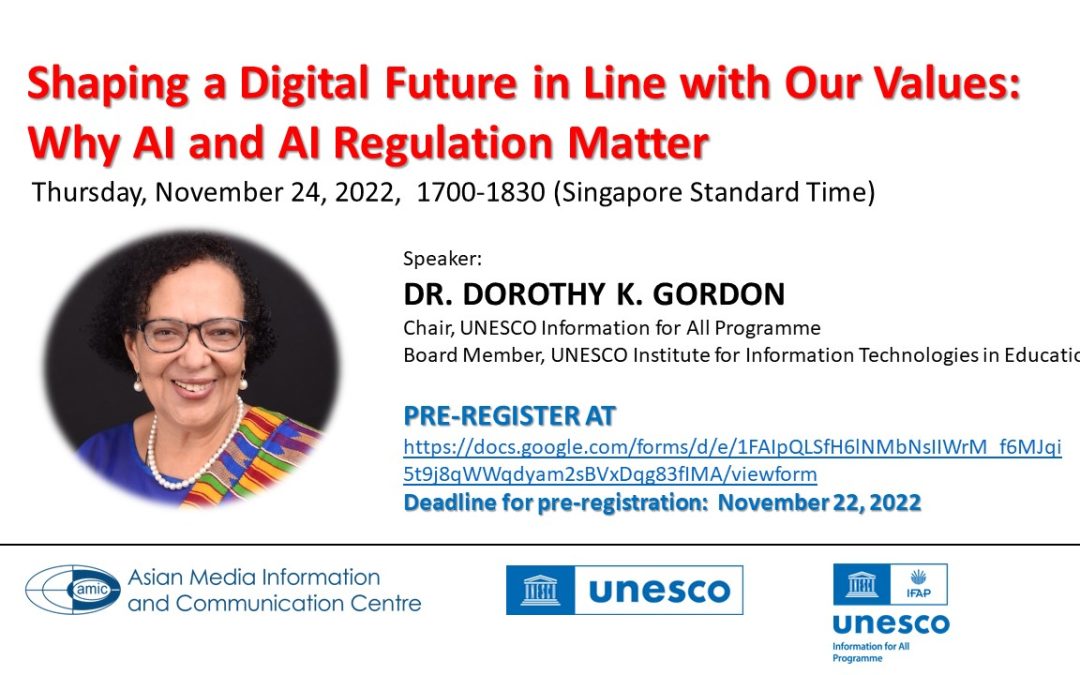
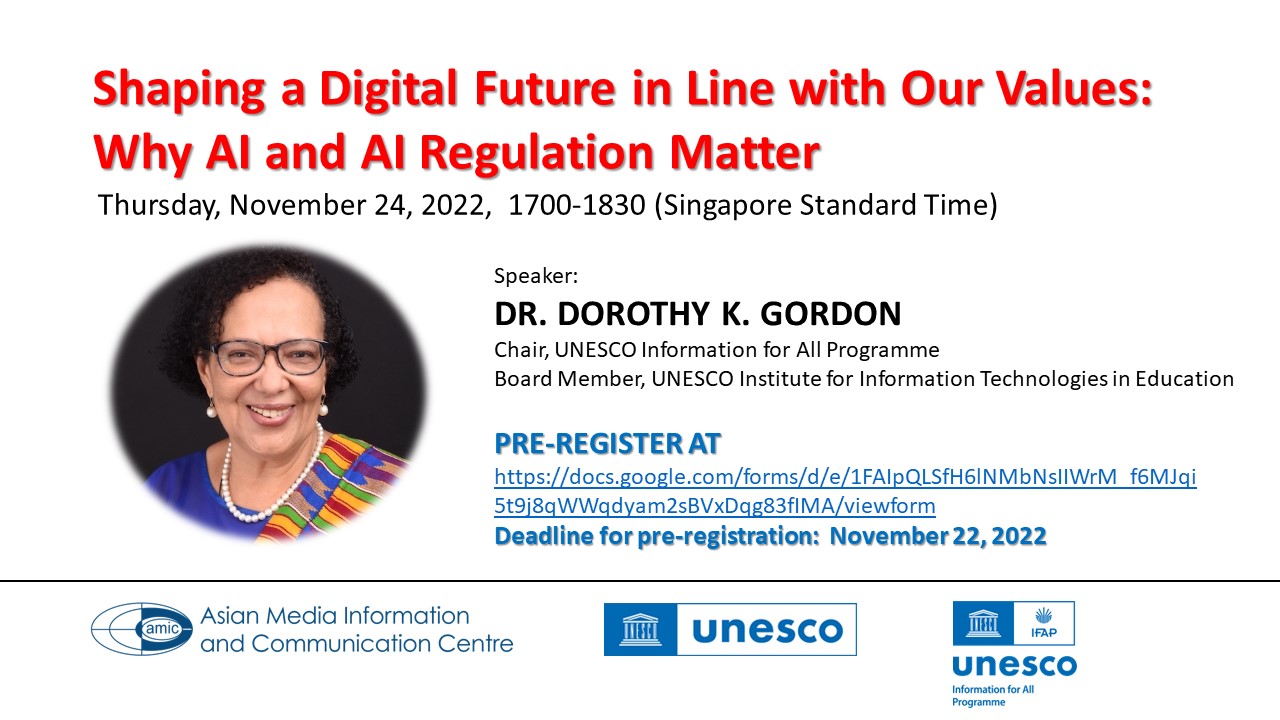
Join us at the online forum, Shaping a Digital Future in Line with Our Values: Why AI and AI Regulation Matter. This is scheduled on Thursday, November 24, 2022 at 1700-1830 (Singapore Standard Time). 

Our resource speaker is Dorothy K. Gordon, Chair, UNESCO Information for All Programme and Board Member, UNESCO Institute for Information Technologies in Education, Board Member World Summit Awards and Board member Linux Professional Institute. Ms. Gordon is associated with the Global Partnership for Artificial Intelligence.

This webinar is being organized by the Asian Media Information and Communication Centre (AMIC) in partnership with UNESCO and the UNESCO Information for All Programme.

To join the webinar, please pre-register at https://docs.google.com/forms/d/e/1FAIpQLSfH6lNMbNsIIWrM_f6MJqi5t9j8qWWqdyam2sBVxDqg83fIMA/viewform

Deadline for Pre-Registration:  22 November 2022

Communication Theory Off the Press

Communication Theory Off the Press

Communication Theory Off the Press

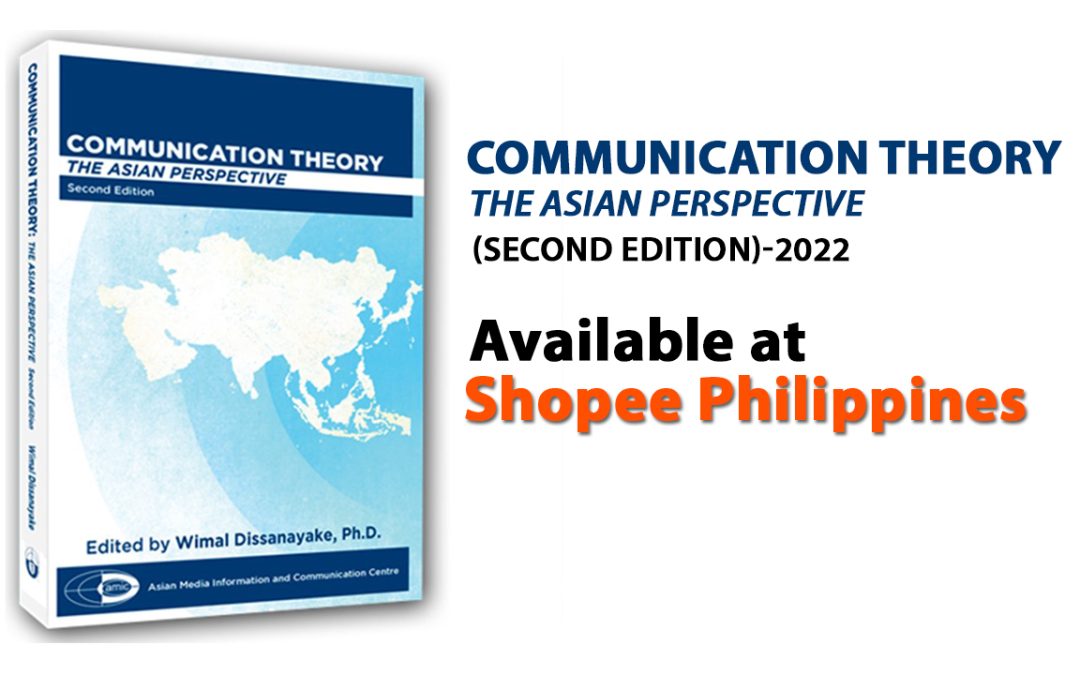
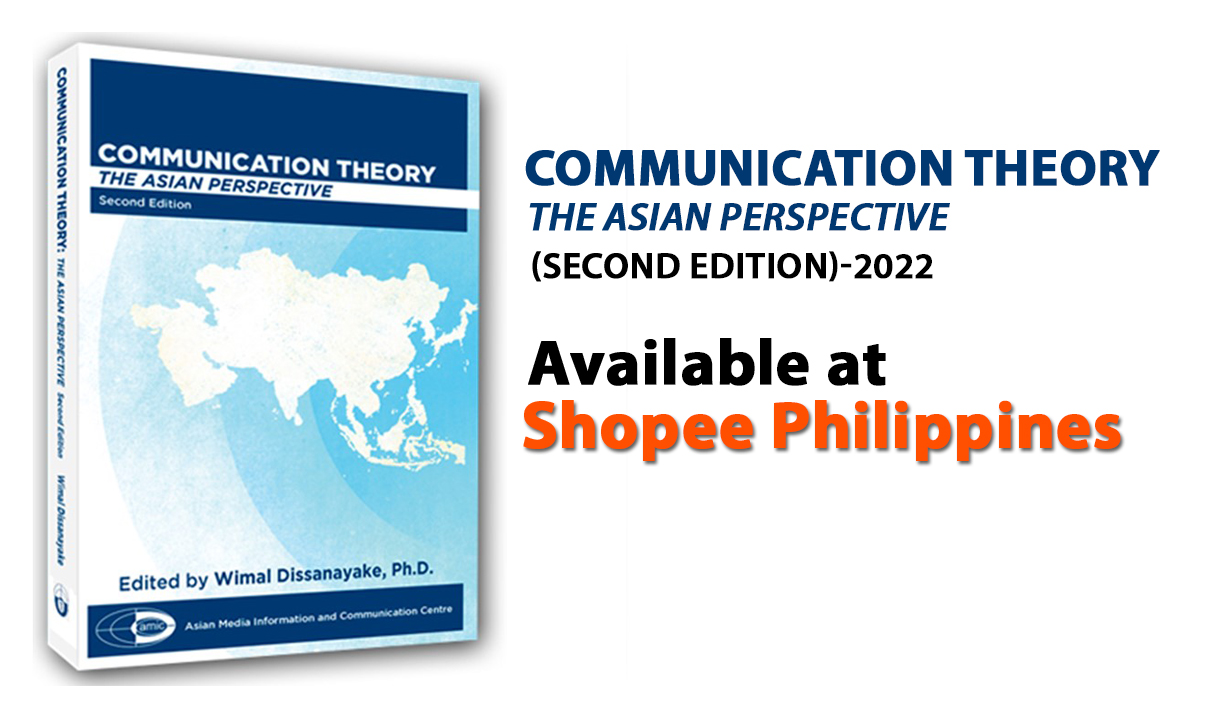
Communication Theory: The Asian Perspective, 2nd edition (2022), edited by Dr. Wimal Dissanayake, packs in one volume the thoughts, perspectives, and arguments of the leaders in Asian communication scholarship—both the early trailblazers and those who have followed them in the field of communication/mass communication research in Asia.

In the last 50 years, these authors have been the persistent voices calling for a commitment among scholars to enrich and expand the global communication setting with Asian communication theories, perspectives, paradigms, values, and practices. 

This book will be most useful to students, faculty, and researchers of communication/mass communication in Asia and around the world as they seek to understand the processes and dynamics of communication/mass communication not only from the Western point of view but also from a more inclusive and global perspective.

For Philippine customers, please order your copy through Shopee at

For offshore customers, please email info@amic.asia.