
AMIC Manila Declaration 2026
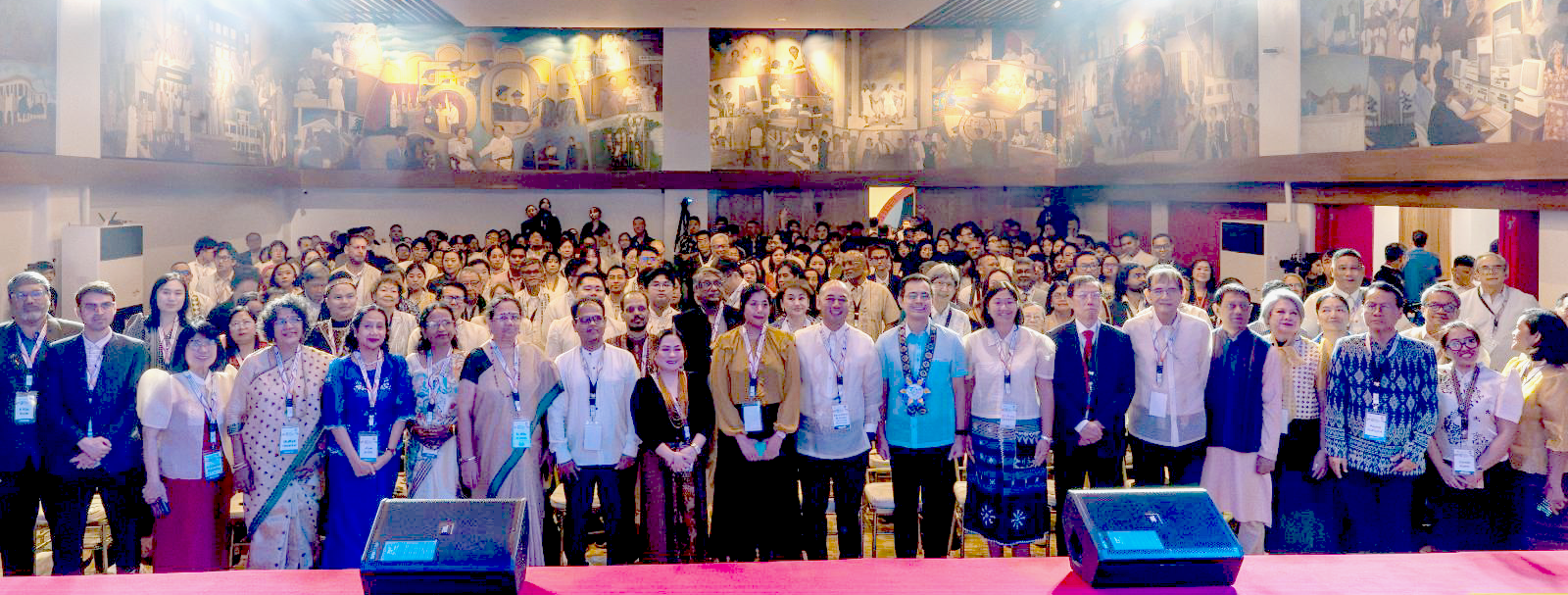
32nd AMIC Annual International Conference
Public Trust, Public Voice: The Role of Communication in Public Governance
Philippine Women’s University
Manila, Philippines | 7 November 2026
Preamble
We, the members of the Asian Media Information and Communication Centre (AMIC) and the delegates to its 32nd Annual International Conference, representing academe, media, government, civil society and technology across Asia and the Pacific, have gathered in Manila under the theme “Public Trust, Public Voice: The Role of Communication in Public Governance.”
We meet at a time when public trust is fragile, when information travels faster than it can be verified, and when artificial intelligence is reshaping how news is made, shared and believed.
We hold that communication is more than the transmission of messages. It is how citizens are heard, how power is held to account, and how communities live together in peace.
Drawing on the ideas our members and delegates contributed during this Conference, we commit ourselves to six pledges whose initials spell the name of our host city: MANILA.
The MANILA Pledges
M — Media and information literacy
Media and information literacy is the first defense of public trust. Citizens who can question what they read, hear and share are harder to deceive and easier to include. We commit to:
- promote critical thinking in our communities; and
- revitalize peace communication as a field of study and practice, so that communication serves understanding rather than division.
A — Accountability and transparency
All public communication must be accountable and transparent. Every government, newsroom and platform in the region should communicate truthfully, accurately and honestly. We commit to:
- make our sources clear and verifiable;
- correct our mistakes openly and promptly; and
- hold one another to the same standard.
N — Nurturing communication rooted in Asia
We owe it to our students, researchers and societies to nurture communication rooted in Asia. The region’s traditions of dialogue and shared meaning belong at the center of how we teach, practice and study communication. We commit to:
- reshape our teaching around communication theories and practices born in Asia;
- build university media labs that link research, practice and local communities; and
- produce research-based data, books, manuals and a compendium of Asian communication theories and methods for future generations to build on.
I — Integrity, inclusion and independence
Integrity, inclusion and independence are inseparable. Reporting must be accurate, fact-based and free from bias, offered authentically and in service of the public good. We commit to:
- ensure that all people, especially those at the margins, are fairly represented in what we publish and broadcast;
- uphold free speech and stand in solidarity with fellow communicators; and
- oppose censorship and undue state control of media wherever they occur.
L — Listening that leads to action
Citizens’ voices matter only when they change decisions. We commit to move beyond “consultation theater” toward consultations with real institutional consequences. We will:
- create inclusive forums where dissent can be voiced and recorded safely;
- hold regular dialogues between citizens and those who govern them;
- build mechanisms that let citizens challenge decisions and demand evidence; and
- keep carrying citizens’ concerns to government until they are acted upon.
A — Artificial intelligence in the public interest
Artificial intelligence must strengthen, never weaken, public trust and the integrity of public communication. We commit to:
- label AI-generated content clearly;
- protect journalistic work from unauthorized AI crawling and use; and
- build public trust deliberately as these technologies reshape how news is made and shared.
Shared Responsibility
These commitments belong to all of us, but each sector carries a distinct share. We call on:
- Academic institutions to teach critical thinking, peace communication, and Asian communication theories and methods; to align curricula and standards with these principles; and to publish research that tracks our progress. We ask academic practitioners, in particular, to practice what they teach.
- The media to report transparently, correct errors openly and defend press freedom.
- Governments to communicate truthfully, answer citizens’ challenges with evidence and refrain from censorship.
- Civil society to convene community dialogues and keep citizens’ concerns before decision-makers.
- Technology platforms to label AI content, respect copyright and design systems that protect the integrity of public communication.
Measuring Our Progress
We will judge this Declaration by evidence, not intentions. When AMIC meets again in 2027, we expect to see early evidence of:
- measurable gains in media literacy and in public trust in governance;
- progress toward peace and social harmony;
- more sustainable journalism;
- policy changes that arose from citizens’ concerns;
- AI labeling and copyright safeguards adopted by newsrooms and platforms; and
- research-based data, books, manuals and a compendium of Asian communication theories and methods produced by our institutions.
We will track progress through:
- a scorecard reviewed by independent parties;
- a short annual progress report from each participating country;
- public reporting by a designated representative of each participating institution; and
- published research on the Declaration’s outcomes.
Our Pledge
We affirm that public trust is built, not assumed, and that public voice is a right, not a favor. We pledge to carry the MANILA commitments into our classrooms, newsrooms, offices, communities and platforms, and to return in 2027 ready to show what has changed.
Adopted in Manila, Philippines, on 7 November 2026, by the members of the Asian Media Information and Communication Centre and the delegates to its 32nd Annual International Conference.